
Inspire Blog Author: Deborah Mundorff

Importance of Self-Care in Online Learning

The following is a guest blog post from Andrea De Lei. Andrea completed an Instructional Design internship with OSU Ecampus during Fall 2021. WHY SELF-CARE IS IMPORTANT FOR COLLEGE STUDENTS Stress is not a new concept to college students, faculty, or staff. By teaching and incorporating self-care and overall health into your curriculum and design, your students can better manage stress and the host of obligations they may have to balance: full course loads, employment, commitments to their family and friends, internship, and networking opportunities. The Covid-19 pandemic this past two years added additional stressors both in teaching and engaging with students -added isolation and global pandemic stressors. To say these past two years was challenging would be an understatement. … Importance of Self-Care in Online Learning
Adding a New Feedback Loop to Your Online Courses

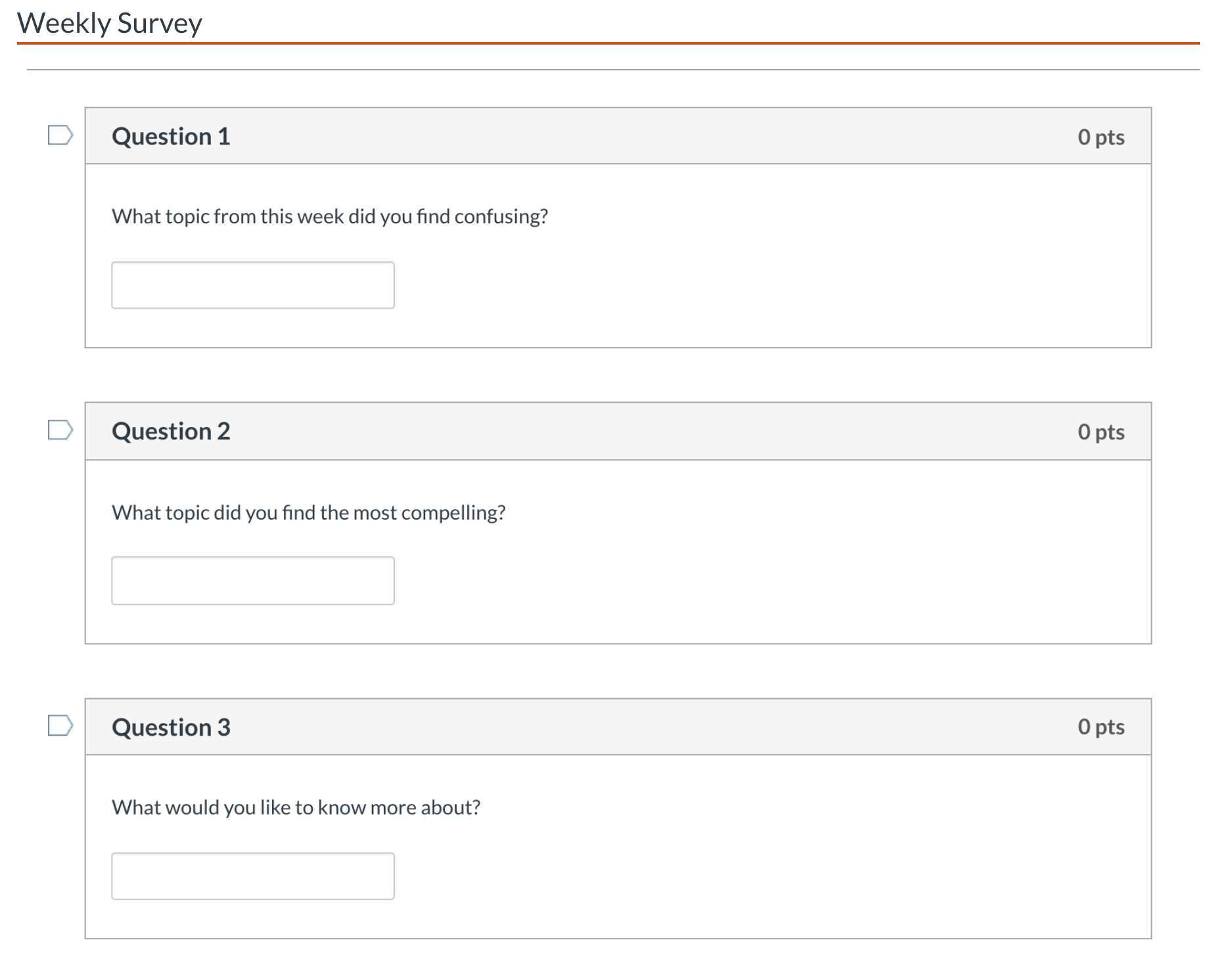
Canvas Survey with Mud Card Questions

New online instructors often express concern about the loss of immediate student feedback they get by teaching in person. These educators count on in-class interaction to help shape their lesson plans in real-time. Student questions, lack of interaction, or even blank looks, help them understand what concepts are difficult for their learners. Others just feel more comfortable with the two-way nature of in-classroom communication. But teaching in an online environment doesn’t have to be mutually exclusive from gauging student interest and comprehension. Mud Cards I was first introduced to the concept of “Mud Cards” or “Muddiest Points” through an open course MIT offered in Active Learning in College-Level Science and Engineering Courses. The instructor described handing out index cards to … Adding a New Feedback Loop to Your Online Courses

Digital Storytelling for Higher Education

About halfway through earning a master’s in education, I took a summer session class on digital storytelling. It ran over the course of three half-day sessions during which we were required to complete two digital stories. I had no great academic ambitions in my approach to these assignments. I was trying to satisfy a degree requirement in a way that worked with my schedule as a single mother of two teenagers working full time while earning a graduate degree. My first story was a self-introduction. I loved this assignment. Even though I had one evening to complete it, I spent hours tweaking it. I enjoyed learning the tools. I enjoyed sharing my story with my classmates. Even after it was graded, … Digital Storytelling for Higher Education

Ten Course Design Strategies to Minimize Cheating

One of the most common questions I get as an Instructional Designer is, “How do I prevent cheating in my online course?” Instructors are looking for detection strategies and often punitive measures to catch, report, and punish academic cheaters. Their concerns are understandable—searching Google for the phrase “take my test for me,” returns pages and pages of results from services with names like “Online Class Hero” and “Noneedtostudy.com” that promise to use “American Experts” to help pass your course with “flying grades.” 1 But by focusing only on what detection measures we can implement and the means and methods by which students are cheating, we are asking the wrong questions. Instead let’s consider what we can do to understand why students … Ten Course Design Strategies to Minimize Cheating