
Inspire Blog Category: Resources, Tools & Trends

Active Learning Online – Part 2

Active Learning Online – Part 2 The first post about active learning looked at how to include active learning in an online course. You heard about how a history professor used an interactive timeline. Each student added images, facts, and descriptions to the timeline, and the result was a visually-rich historical review. Students had fun while learning about facts and events. This is an example of collaboration and active learning at its best. The second example focused on interactive textbooks as an alternative to printed books. The Top Hat product combined words, images, video, and engaging activities to improve learning and make it more active. In today’s post we look at two new active learning ideas: mind mapping and annotated reading. … Active Learning Online – Part 2
The Guest Expert Video Interview: Planning & Production-Part II

Guest Expert Video: Post Production Having a guest expert video in your Ecampus course provides a number of learning benefits. One important benefit is to introduce a second, collaborative voice to instruction (Last, 2015). In Part I of this two-part article series we address interview planning decisions and their relationship to producing an engaging guest expert video.  In Part II we explore the value of instructors collaborating in the post production stage of guest expert interview video editing. Staging the video capture of an outside expert voice was the focus of the first article on this topic in a previous blog post. Once primary and B-roll video is captured it needs to be compiled and arranged into a coherent presentation … The Guest Expert Video Interview: Planning & Production-Part II

Universal Design for Learning in Online Courses

UDL

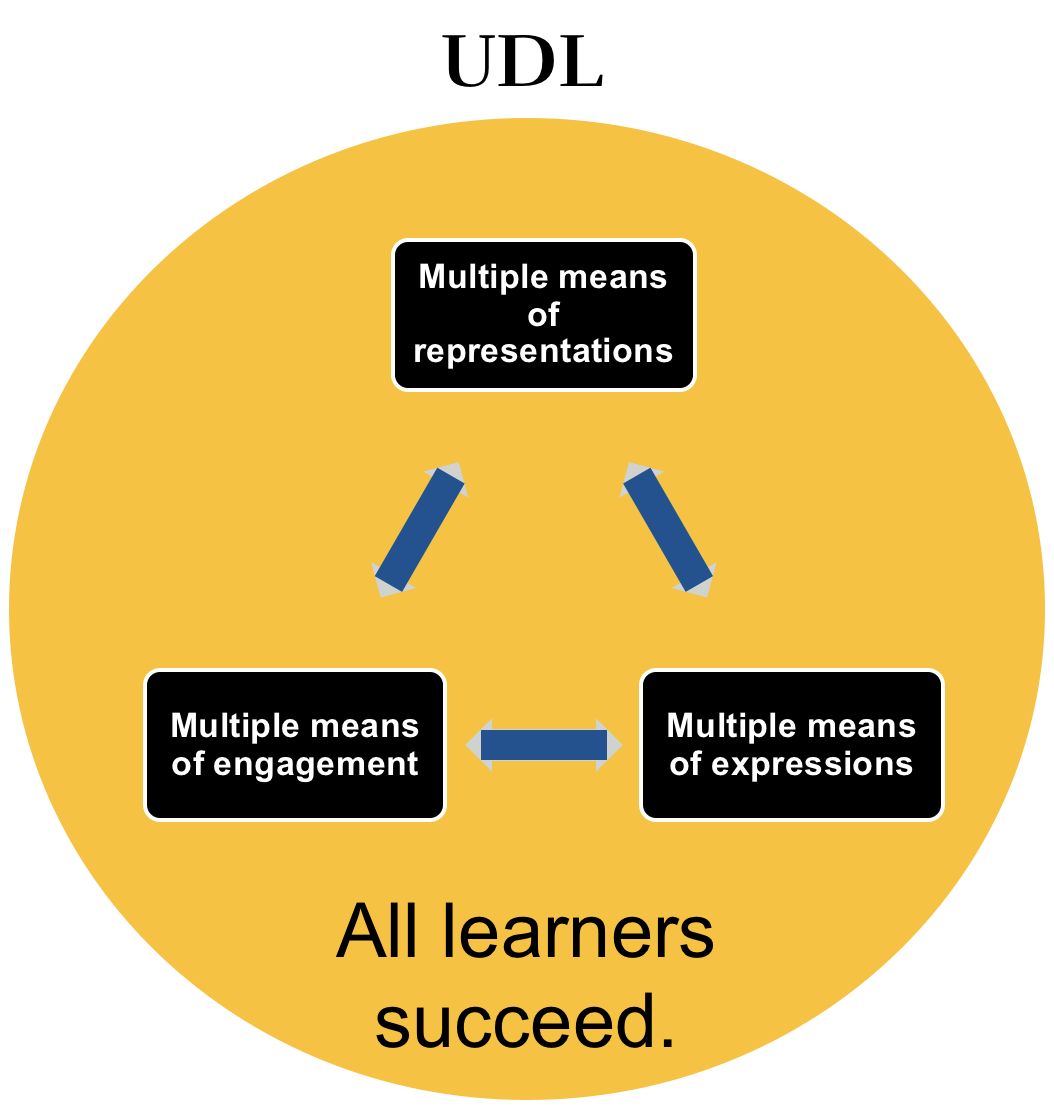
Universal Design for Learning (UDL) is a practical tool for guiding course design to ensure that every learner succeeds, based on scientific insights into how humans learn (cast.org). As seen from the illustration below, there are three main principles of UDL, namely: multiple means of representations, multiple means of engagement, and multiple means of expressions (image by Tianhong Shi, CC0) There are many applications of UDL design principles in OSU Spring 2018 online courses. A. Multiple Means of Representations as seen in BA 354 S18’s weekly content planning. reading in text (Chapter 1 of Trevino and Nelson, Managing Business Ethics) listening to podcast (Ponzi Supernova podcast audio from Radio-lab watching instructor lectures in video (Course Introduction) Watching complicated assignment explained … Universal Design for Learning in Online Courses

Student Personas (An Introduction)

What is a Student Persona? A student persona is a summary of a specific type of student. This persona represents archetypes NOT stereotypes of a broader student segment or group. A student persona summarizes who the student users are and why they are using the learning system, as well as what behaviors, assumptions, and expectations determine their view of the learning system. Why Create Student Personas? There are many reasons why instructors and instructional designers and developers create and use student personas, such as: To represent the major needs of the key student user groups. To provide a reliable and accurate representation of your targeted student audience. To enable you to focus on a manageable and memorable group of students. … Student Personas (An Introduction)

Two Ways to Apply the New Science of Learning . . . Online

The New Science of Learning is a slim but instructive volume designed to guide college students to better attune their learning efforts with how their brains function. Authors Terry Doyle and Todd Zakrajsek apply the findings of neuroscience to the daily learning that takes place in higher education. Though the book is written for students, it’s a valuable quick-read for everyone involved in blended and online teaching and student success efforts. As you look ahead to spring term, let’s consider two ways you can employ Doyle and Zakrajsek’s advice in online and hybrid teaching environments: Tip 1 – Learning is significantly strengthened by encountering the content in multiple formats or modalities. Problem: Much of the information we encounter online is … Two Ways to Apply the New Science of Learning . . . Online