
Inspire Blog Category: Tips & Tricks

Active Learning Online – Part 2

Active Learning Online – Part 2 The first post about active learning looked at how to include active learning in an online course. You heard about how a history professor used an interactive timeline. Each student added images, facts, and descriptions to the timeline, and the result was a visually-rich historical review. Students had fun while learning about facts and events. This is an example of collaboration and active learning at its best. The second example focused on interactive textbooks as an alternative to printed books. The Top Hat product combined words, images, video, and engaging activities to improve learning and make it more active. In today’s post we look at two new active learning ideas: mind mapping and annotated reading. … Active Learning Online – Part 2
Universal Design for Learning in Online Courses

UDL

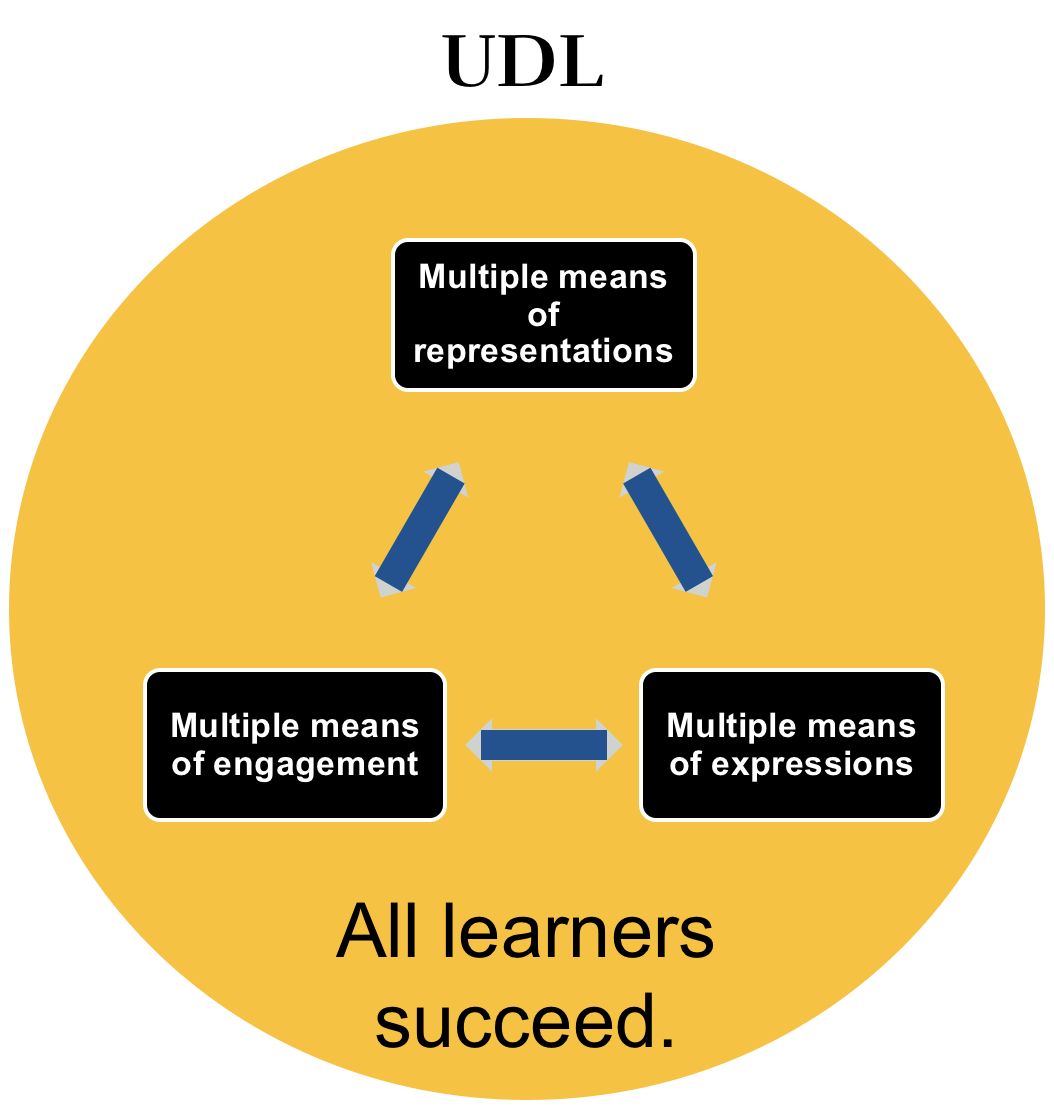
Universal Design for Learning (UDL) is a practical tool for guiding course design to ensure that every learner succeeds, based on scientific insights into how humans learn (cast.org). As seen from the illustration below, there are three main principles of UDL, namely: multiple means of representations, multiple means of engagement, and multiple means of expressions (image by Tianhong Shi, CC0) There are many applications of UDL design principles in OSU Spring 2018 online courses. A. Multiple Means of Representations as seen in BA 354 S18’s weekly content planning. reading in text (Chapter 1 of Trevino and Nelson, Managing Business Ethics) listening to podcast (Ponzi Supernova podcast audio from Radio-lab watching instructor lectures in video (Course Introduction) Watching complicated assignment explained … Universal Design for Learning in Online Courses

Ready-to-Use Online Teaching Tips

Beauty is everywhere and in every moment, if we pay attention. I saw this beautiful sunrise driving by Eureka, Nevada on Highway 50, the loneliest road in America, during the tail of my one-week road trip vacation. Similarly, good teaching practices are flourishing in OSU online courses as we discover from our talks with Ecampus instructors. To inspire you to expand your teaching toolkit, here are some ready to use online teaching tips from the book “Small Teaching: Everyday Lessons from the Science of Learning” by James Lang.  Teaching Strategies Online Teaching Tips Retrieving Syllabus Quiz Weekly reading journals Frequent quizzing such as quizlet practices or weekly quizzes predicting Pretesting with immediate grading and immediate feedback including exposure of content teaching; Role play: how might … Ready-to-Use Online Teaching Tips

Should You Consider an Interactive Video Lesson?

If you are considering developing an online course with Ecampus, you may be curious how you will translate your lectures to the online format. There are several effective online lecture presentation formats available to faculty. They differ in the type of video recording required and the kind of post-production work required after the initial recording. Each of the presentation formats can be effective, however the more complex types can offer additional advantages for your students. Why should you consider producing the most challenging of the five online lecture formats? To answer that question, we need to understand what exactly an interactive video lesson is. Let’s start by first looking at a sample interactive video lesson used in a fall 2017 course titled … Should You Consider an Interactive Video Lesson?

Liven Up That Intro Discussion!

Research supports the value of online student-to-student interaction and building community among learners. Week 1 intro discussions—Let’s get acquainted. Tell us about yourself!—are a staple of interaction among students in online and hybrid courses. Can a Week 1 intro discussion that introduces students to one another also actively engage them in learning course content while building community with peers? Karen Holmberg, Assoc. Prof. of Creative Writing, uses an “Interview Haiku” exercise in her hybrid WR 241 Introduction to Poetry Writing course that combines students introducing themselves and introducing peers while practicing the popular three-line poetry form. After being introduced to haiku, syllable counting and marking stresses in the first week, Prof. Holmberg’s students interview partners during an in-class session. (In … Liven Up That Intro Discussion!