Inspire Blog Author: Angelique Pearson

Behind the Buzzword: Creating Belonging for Online Students (part 1 of 2)

“Belonging is a universal human need that is fundamentally linked to learning and well-being. It describes an individual’s experience of feeling that they are, or are likely to be, accepted and respected as a valued contributor in a specific environment.”            Structures for Belonging: A Synthesis of Research on Belonging-Supportive Learning Environments Maslow’s Hierarchy of Needs is a helpful framework when discussing belonging, which falls in the middle, at level three, just above the basics for survival (level one: air, water, food, shelter) and safety (level 2: health, employment, family, security).  Image from Wikimedia Commons Have you heard the word belonging recently in reference to students and employees? At OSU, it seems to be popping up … Behind the Buzzword: Creating Belonging for Online Students (part 1 of 2)
Best Practices for Announcements in Canvas

Announcements are among the most basic yet effective ways to communicate with students, whether in person or online. In our Ecampus asynchronous online courses, announcements are often the primary way instructors pass on important information to students and can be a formidable tool for fostering instructor presence. They can be used to welcome and orient students, summarize and reiterate key concepts, and remind students about upcoming assignments, projects, and exams. Some instructors send out weekly announcements that reflect on the prior week and provide general feedback on student performance, while others only use announcements for course related logistics such as schedule changes or instructor unavailability. No matter how you use announcements, the following suggestions can help ensure you are leveraging … Best Practices for Announcements in Canvas

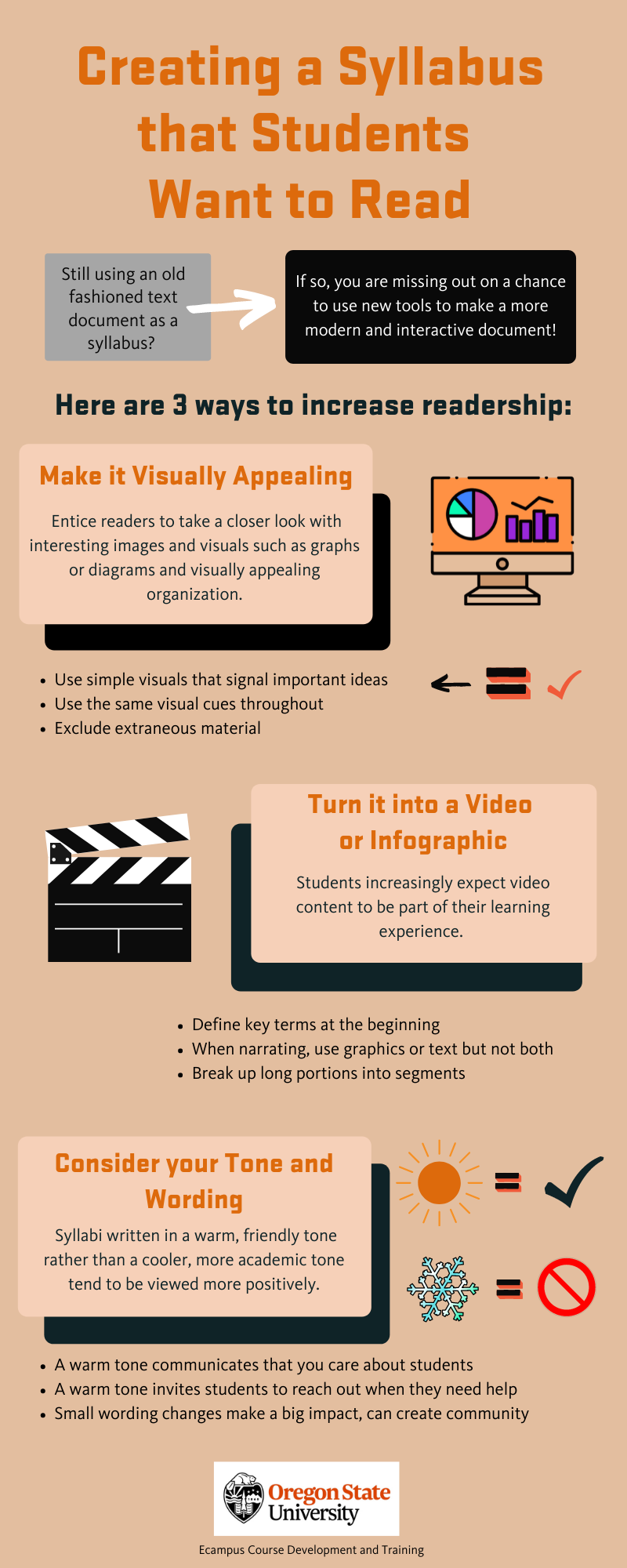
Creating a Syllabus that Students Want to Read

Tricks to creating a syllabus students want to read

In December 2021, CNN published a news story that went viral, featuring a Tennessee professor who hid in his syllabus a combination that led to a locker with a crisp $50 bill for the taking. When he announced at the end of the term that not a single student had claimed the prize, few were actually surprised. Hiding an Easter egg of this sort in the text of your syllabus is certainly a fun idea and a nice bonus for the most diligent student(s) who might find it, but there are other ways to get students to read what could arguably be the most important document in your course.  A course syllabus has traditionally served many overlapping purposes. From an … Creating a Syllabus that Students Want to Read

Social Annotation as a Learning Tool

“Annotation provides information, making knowledge more accessible. Annotation shares commentary, making both expert opinion and everyday perspective more transparent. Annotation sparks conversation, making our dialogue – about art, religion, culture, politics, and research – more interactive. Annotation expresses power, making civic life more robust and participatory. And annotation aids learning, augmenting our intellect, cognition, and collaboration. This is why annotation matters.”                                            -Kalir and Garcia Annotation  When you think back to your early college years, you may remember your professor assigning a text to annotate. Annotating a text has long been a common task in higher education, one that ideally promotes deeper reading, interaction with, and comprehension of important texts. Annotation assignments vary widely but the traditional paper-based type of annotation … Social Annotation as a Learning Tool

Improving Group Work in Asynchronous Courses

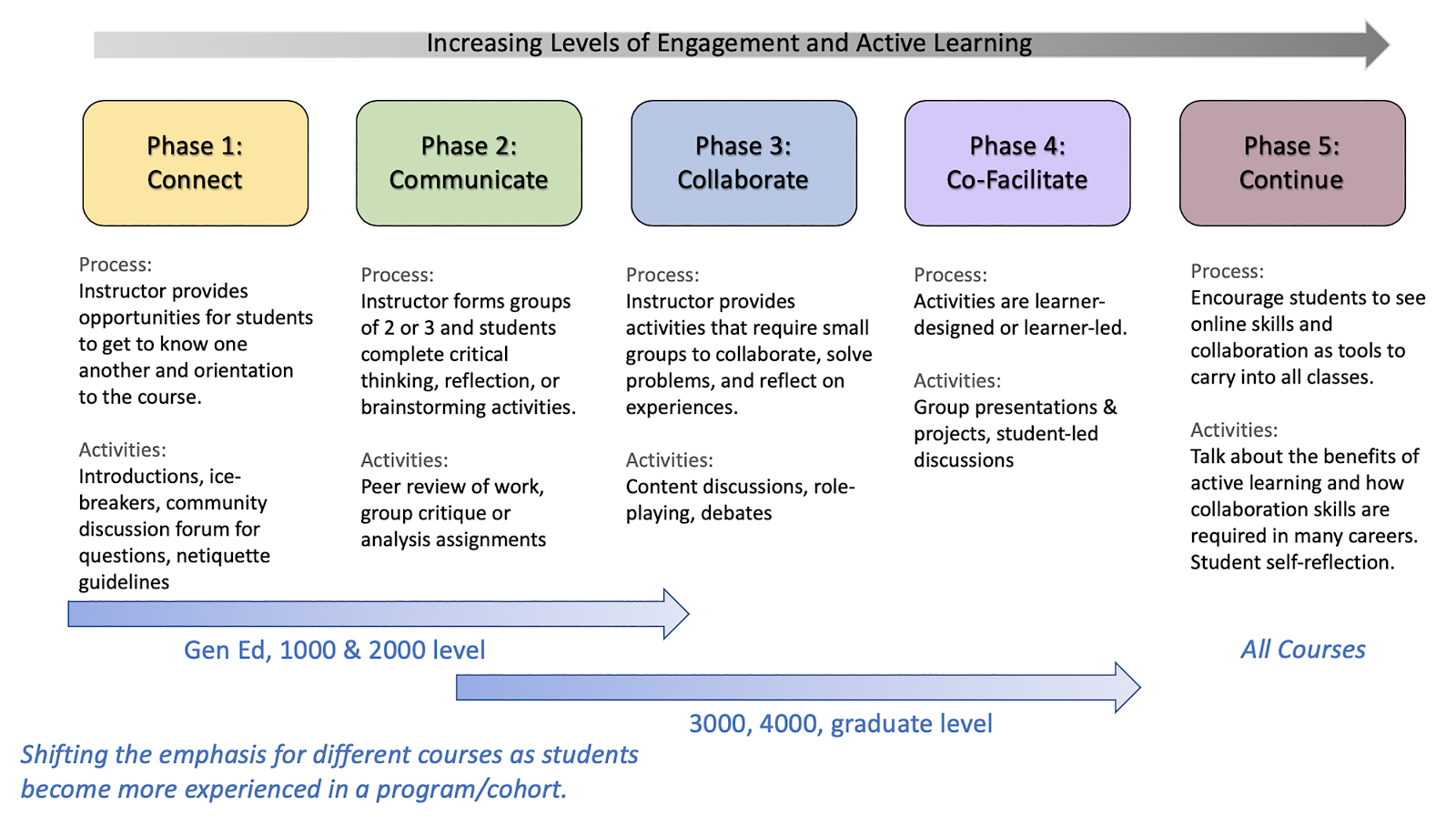
chart of five phases of engagement: connect, communicate, collaborate, co-facilitate, and continue

 Why Group Work Is Important  Love it or hate it, group work is an important part of education. Learning to work cooperatively with diverse people is a core 21st century skill, one which employers increasingly value and expect new workers to have mastered. Experience gathered from group work in educational settings directly transfers to and prepares students for successful collaboration in work teams. By collaborating in teams, students learn a wide range of discrete as well as soft skills that make group work worth the effort, including those below. Technology skills Social skills Self-awareness Empathy Coping with stress Creating work plans and schedules Forecasting needs and hurdles Time management & meeting deadlines Working with difficult personalities Managing & navigating unmet … Improving Group Work in Asynchronous Courses