Inspire Blog Author: Angelique Pearson

Five Ways Faculty Can Support Online Student Mental Health

In May 2026, OSU became the first Health Promoting University in Oregon, officially adopting The Okanagan Charter, an international, collaboratively drafted vision that calls on institutions of higher education to incorporate health-promoting practices at every level and create supportive environments that encourage and inform health knowledge across campus. As part of this effort, over the past two years Oregon State University’s Student Mental Health Improvement Initiative has worked to gather information about student mental health across the Corvallis campus, OSU-Cascades, and Ecampus. Sponsored by the Health Promoting University Core Group, Counseling & Psychological Services (CAPS), and the Center for Teaching and Learning (CTL), the initiative brought together faculty, staff, and campus partners to examine how institutional practices influence student well-being. … Five Ways Faculty Can Support Online Student Mental Health
Customizing Your Canvas Course

Customizing your Canvas course is a simple way to create a smoother, more intuitive learning experience—for both you and your students. With a few strategic adjustments, you can create a polished, efficient Canvas set-up that gives students a clean, streamlined learning environment. Personalize Your Home Page Instructors can choose which page students see first when clicking into their Canvas course, and a well-designed homepage can act as a dashboard for the entire course. Most Ecampus courses have a home page that includes a custom banner with the course code and name as well as links to the modules, Start Here module, and Syllabus page. You might want to add links to external tools or websites your students will use frequently … Customizing Your Canvas Course

Improving the Feedback Cycle, Part 2

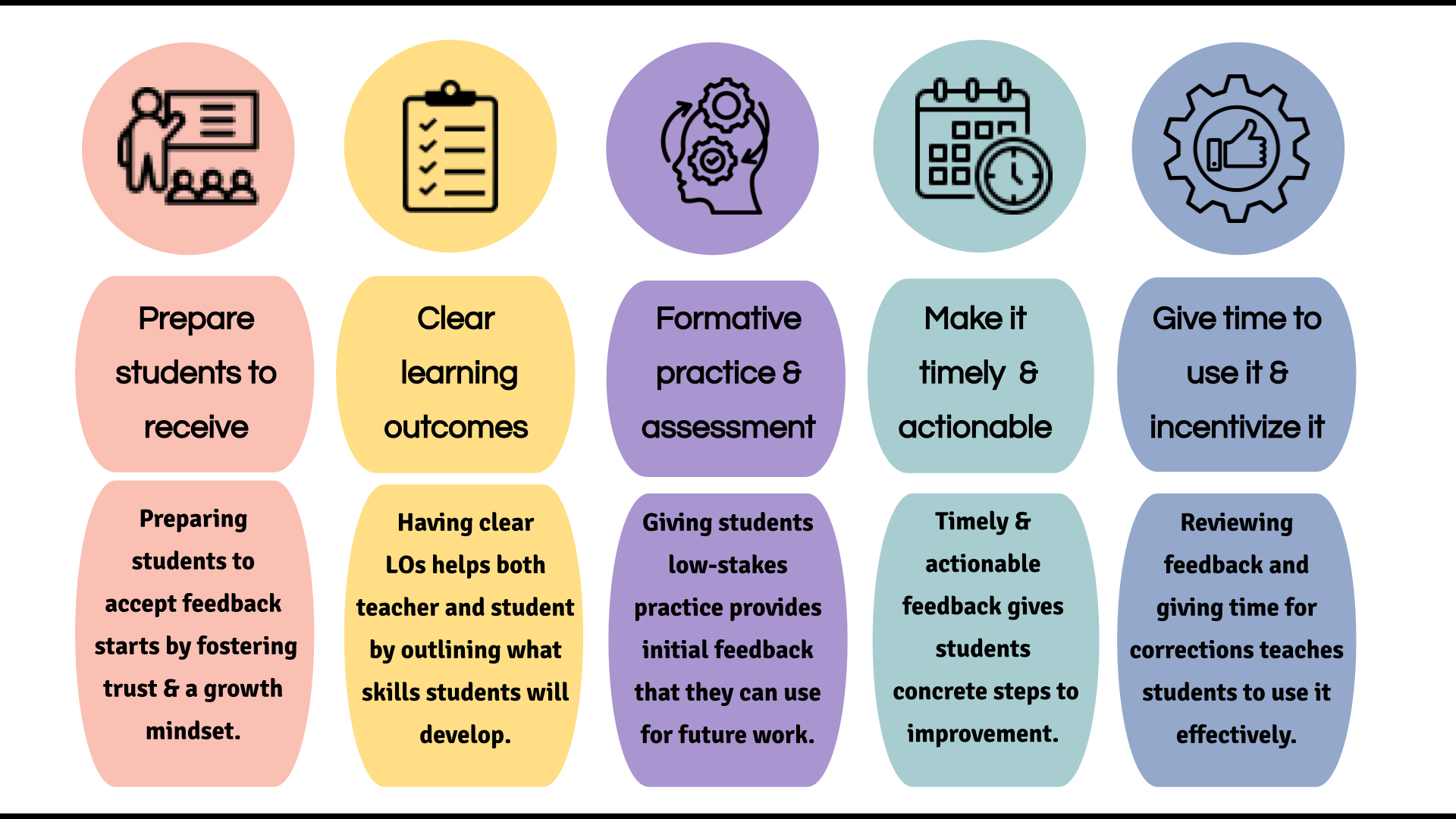
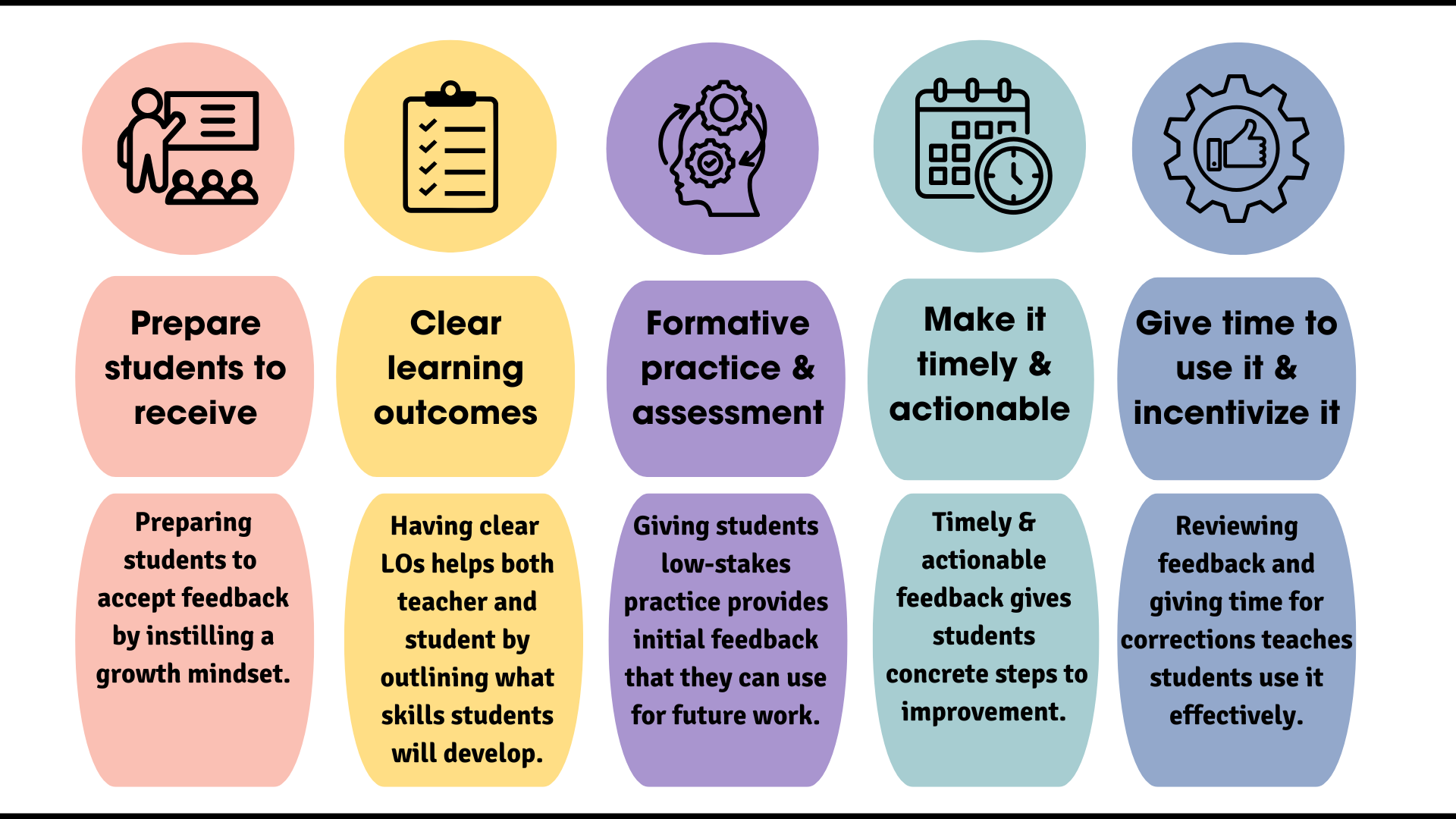
chart describing the steps in the feedback process

In part one of this two-part blog series, we focused on setting the stage for a better feedback cycle by preparing students to receive feedback. In part two, we’ll discuss the remaining steps of the cycle- how to deliver feedback effectively and ensure students use it to improve. In part one, we learned about the benefits of adding a preliminary step to your feedback system by preparing students to receive suggestions and view them as helpful and valuable rather than as criticism. If you haven’t read part one, I recommend doing so before continuing. This first crucial but often overlooked step involves fostering a growth mindset and creating an environment where students understand the value of feedback and learn to … Improving the Feedback Cycle, Part 2

Improving the Feedback Cycle, Part 1

graphic image of the five steps in the feedback cycle

An effective feedback cycle starts before the feedback is given by laying careful groundwork. The first and often-overlooked step in the cycle is preparing students to receive feedback, which takes planned, ongoing work.

Behind the Buzzword: Creating Belonging for Online Students (part 2 of 2)

What can we do to help? Oregon State University has prioritized diversity, equity and inclusion efforts, and it is up to us as educators and those who support teaching and learning to actively co-create a culture that promotes tolerance and inclusion, for our students, our staff, and our community. To do this, we must challenge exclusion and commit to inclusive practices that promote real equity and extend opportunity to all students. University staff and instructors may be intentionally or unintentionally signaling their institution’s, their department’s, or their own levels of inclusion by the policies, rules, statements, systems, symbols, and representations they choose and use, so it is important to reassess what messages we are sending to students. While students may … Behind the Buzzword: Creating Belonging for Online Students (part 2 of 2)