Inspire Blog Author: shatkinl

An Inclusive Time-Saver: “The Token Tracker” Brings Structure to Flexible Assignment Policies
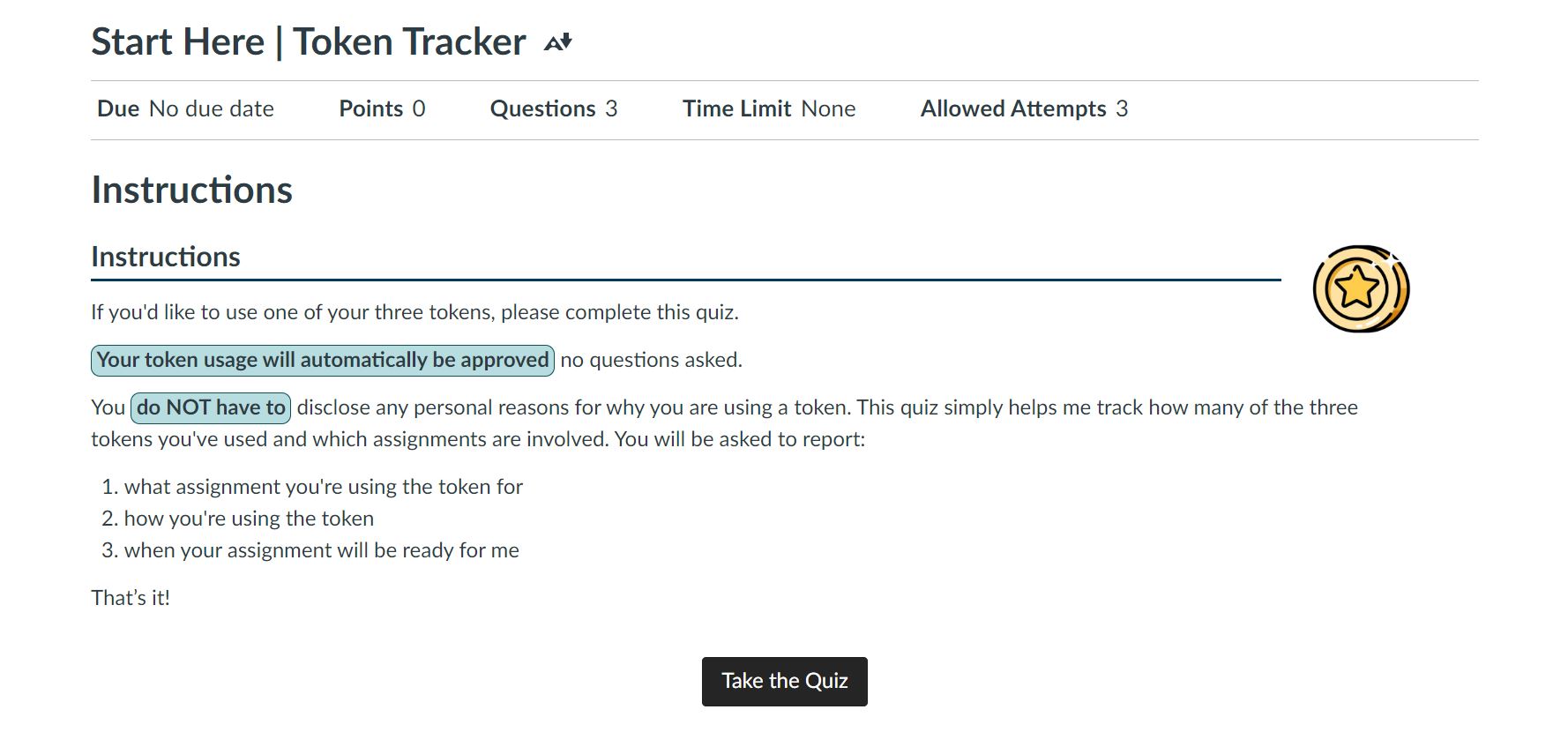
track late assignments with a simple Canvas quiz

This fall and winter I worked with two instructors from very different disciplines to achieve a common goal – making their courses inclusive through a flexible assignment policy. Both courses gave students opportunities to recover without penalty from what would otherwise be a setback – a late, missed, or low-scoring assignment. Flexible assignment policies aren’t new, but instructors are now extending grace to students without the requirement to ask in advance, provide an excuse, or share official documentation, such as a doctor’s note. Our collective pandemic experience has revealed the inequity of having the instructor adjudicate the validity of the excuse, as well as the impracticality of producing documentation on demand. (Can you readily access a doctor when you’re too … An Inclusive Time-Saver: “The Token Tracker” Brings Structure to Flexible Assignment Policies
How Should I Work with Your Words?

Bringing Critical Language Awareness to Instructional Texts and to How You Evaluate Student Writing Instructional designers spend a lot of time working with words – they’re the raw materials that instructors share with us in the development of their online courses – but it’s often unclear what liberties we should take with instructors’ writing, and, on a related note, how we should coach instructors to assess their students’ writing. If inclusivity and equity are central values in course design, how might that be reflected in the seemingly mundane act of copyediting instructional texts or in setting up an instructor’s rubric to include “standard” grammar as a criterion? When the instructional designer copy edits the instructor’s words, or the instructor assesses … How Should I Work with Your Words?

My Experience with Emojis in Online Courses: Affordances and Considerations

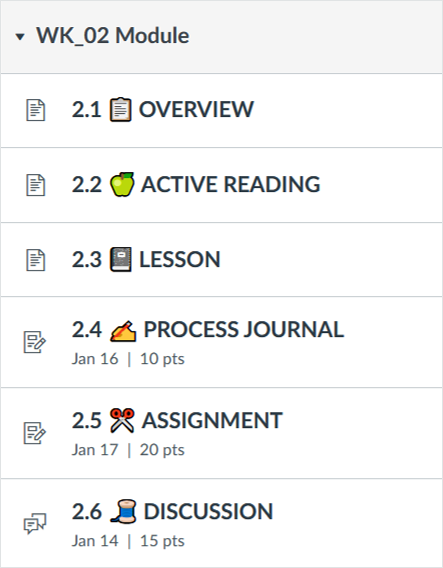
clipboard, green apple, notebook, hand writing with pencil, scissors and spool of thread emojis used in module items

What should you know about emojis if you plan to use them in your online courses? Not being an extremely online person and not, perhaps, of the right generation, I came to emojis later than others and felt uncertain using them. What did these symbols communicate to others, and how would it reflect on me if I used them in my work with instructors and students? Without research-based answers to these questions, I nonetheless began using emojis in online course designs for the purpose of visual wayfinding and for fostering a friendly, playful tone. After several terms of using emojis in this way, I wondered whether they were accomplishing my goals. Now I’d like to share the background on emojis … My Experience with Emojis in Online Courses: Affordances and Considerations

Is it okay to use YouTube videos in your course?

Is it okay to use YouTube videos in your course? What about copyright? I get inquiries like this often. Here I’ll share the most common questions from instructors and the answers I provide. Q: Should I be concerned about relying on a link to a YouTube video for essential course content? There are quite a few YouTube videos on a topic I cover in my course, and all of them are better than what I could put together on my own, given the constraints on my time and technical expertise. A: There are several considerations when using YouTube videos:  YouTube videos may be taken down at some later date, and this would be a problem if you are relying on … Is it okay to use YouTube videos in your course?

Asynchronous Conversations in VoiceThread

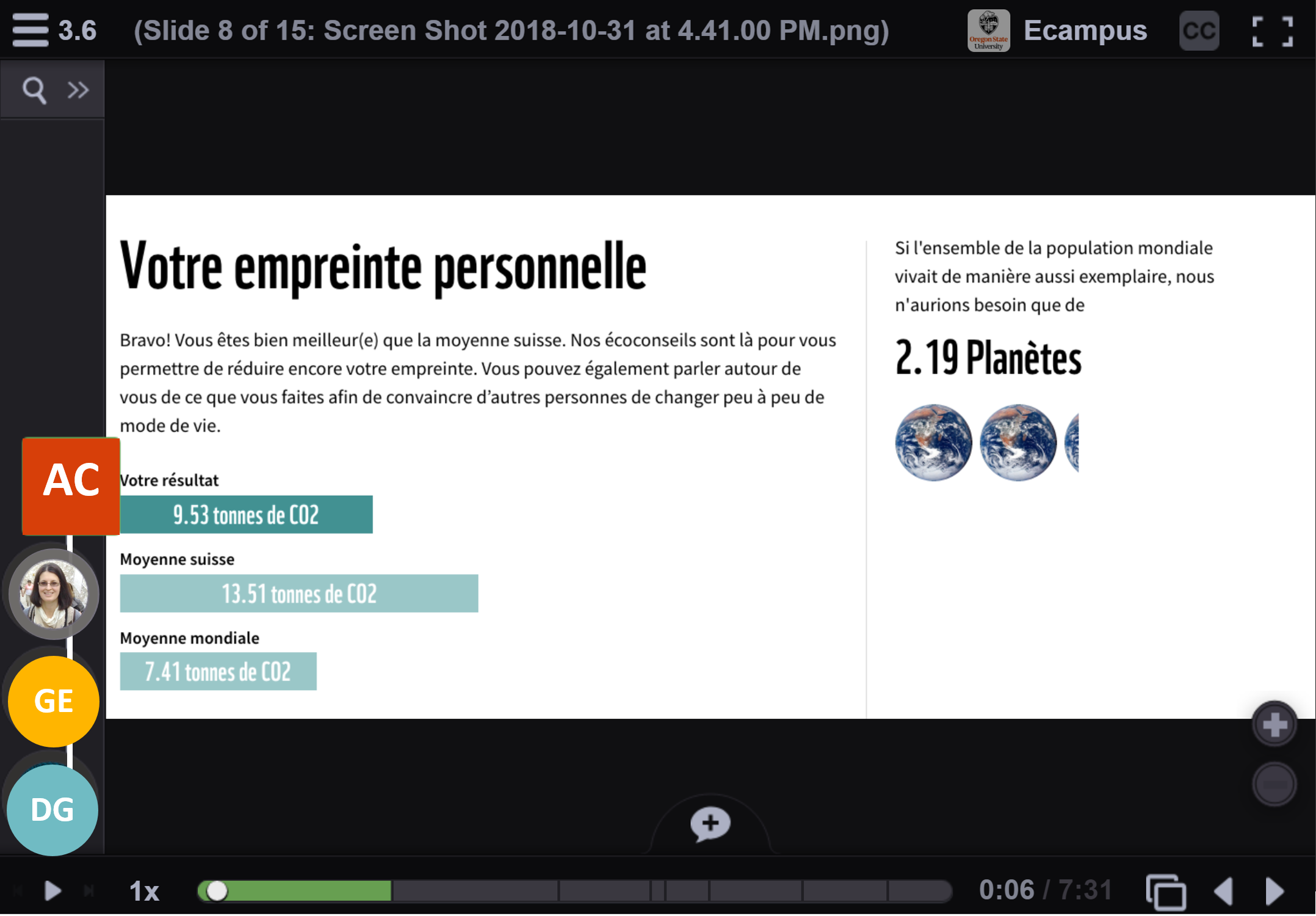
student response slide

In my last post, I described how Ecampus courses use synchronous study sessions to provide listening and speaking practice to students of world languages. Much of the Ecampus language learning experience is entirely asynchronous, however, to provide flexibility for our students. So how exactly do students converse asynchronously? This post will describe the design of asynchronous listening and speaking exercises in 300-level French conversation courses, executed by Ana-Maria M’Enesti, PhD, and facilitated via VoiceThread, a slide show within the LMS that displays course content about which participants comment via text, audio, or video. VoiceThread was an appealing platform because of the ease with which students can add audio or video comments, more streamlined than the protocol for uploading video to … Asynchronous Conversations in VoiceThread