
Inspire Blog Category: Course Design/Learning Design

Rubrics Markers of Quality –Tips and Best Practices (Part 2)

There are many benefits to using rubrics for both instructors and students, as discussed in Rubrics Markers of Quality Part 1 – Unlock the Benefits. Effective rubrics serve as a tool to foster excellence in teaching and learning, so let’s take a look at some best practices and tips to get you started. Best Practices Alignment Rubrics should articulate a clear connection between how students demonstrate learning and the (CLO) Course Learning Outcomes. Solely scoring gateway criteria, the minimum expectations for a task, (e.g., word count, number of discussion responses) can be alluring. Consider a rubric design to move past minimum expectations and assess what students should be able to do after completing a task. Detailed, Measurable, and Observable Clear … Rubrics Markers of Quality –Tips and Best Practices (Part 2)
Rubrics: Markers of Quality – Unlock the Benefits! (Part 1)

Would you like to save time grading, accurately assess student learning, provide timely feedback, track student progress, demonstrate teaching and learning excellence, foster communication, and much more? If you answered yes, then rubrics are for you! Let’s explore why the intentional use of rubrics can be a valuable tool for instructors and students. Value for instructors Time management: Have you ever found yourself drowning in a sea of student assignments that need to be graded ASAP (like last week)?  Grading with a rubric can quicken the process because each student is graded in the same way using the same criteria. Rubrics which are detailed, specific, organized and measurable clearly communicate expectations. As you become familiar with how students are commonly … Rubrics: Markers of Quality – Unlock the Benefits! (Part 1)

Asynchronous Conversations in VoiceThread

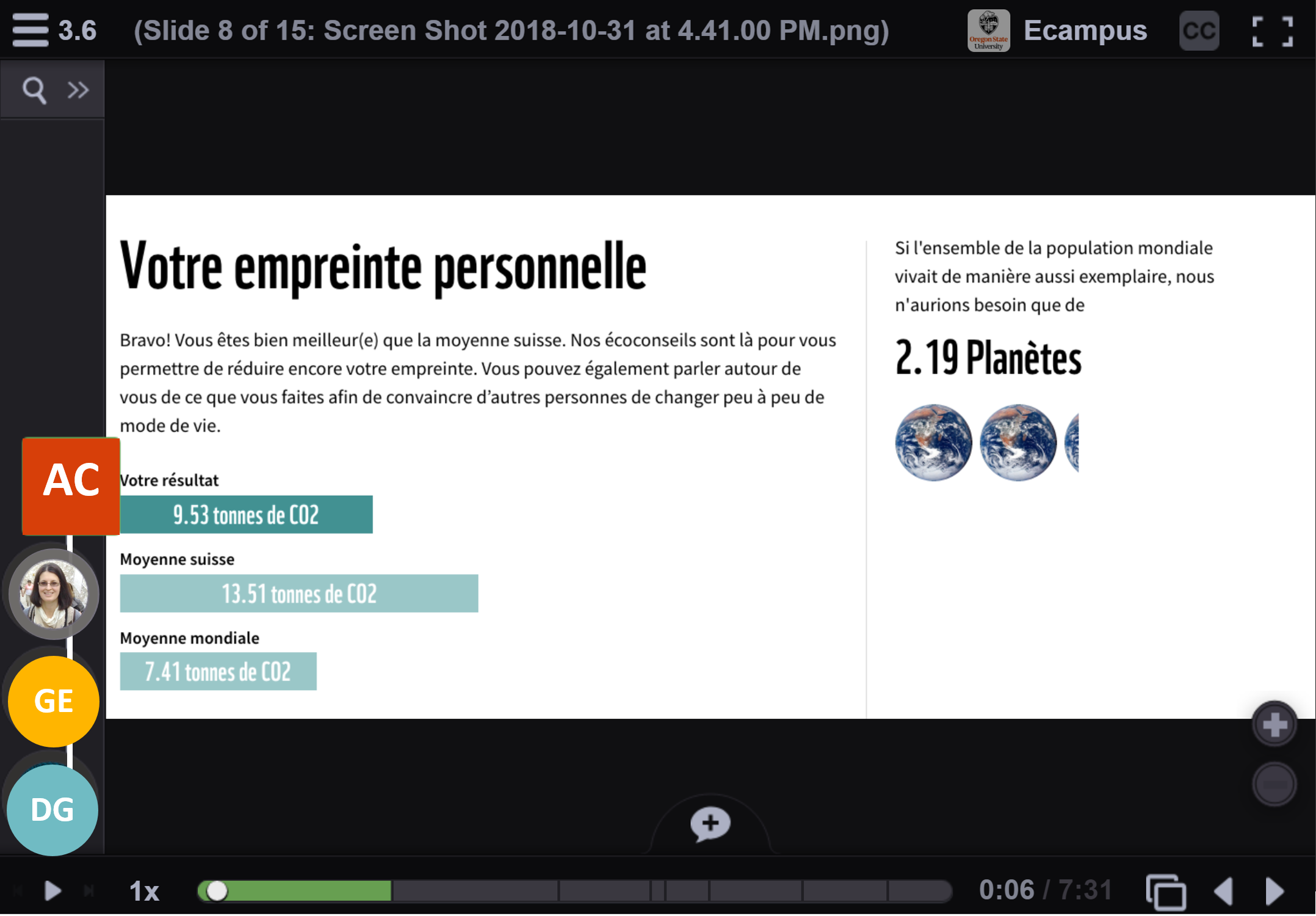
student response slide

In my last post, I described how Ecampus courses use synchronous study sessions to provide listening and speaking practice to students of world languages. Much of the Ecampus language learning experience is entirely asynchronous, however, to provide flexibility for our students. So how exactly do students converse asynchronously? This post will describe the design of asynchronous listening and speaking exercises in 300-level French conversation courses, executed by Ana-Maria M’Enesti, PhD, and facilitated via VoiceThread, a slide show within the LMS that displays course content about which participants comment via text, audio, or video. VoiceThread was an appealing platform because of the ease with which students can add audio or video comments, more streamlined than the protocol for uploading video to … Asynchronous Conversations in VoiceThread

Debunking Neuromyths and Applications for Online Teaching and Learning: Part 2

                                                                                                    made with wordart.com In part 1 of Debunking Neuromyths and Applications for Online Teaching and Learning, we reviewed the neuromyths and neuro-facts about learning styles, intelligence, and emotions, and their corresponding online teaching applications. Here is part 2, where we will review the neuromyths and neuro-facts about sleep, memory, attention and creativity, and their corresponding online teaching applications. #4 About sleep:  “When you sleep, your brain shuts down.”  Is this statement … Debunking Neuromyths and Applications for Online Teaching and Learning: Part 2

Debunking Neuromyths and Applications for Online Teaching and Learning: Part 1

(image generated at wordart.com) As we have settled into the start of a new term, it is a good time to pause for a short moment and reflect: is there something new I can learn about teaching and learning and apply it in my teaching? “Neuromyths: Debunking false ideas about the brain” (Tokuhama-Espinosa, 2018) offers an easy read yet presents challenging ideas. Could our beliefs about teaching and learning be totally wrong as neuroscience develops and scientists unravel more and more understanding about how our brain functions? In this post, we will investigate three aspects of learning: learning styles, intelligence and emotions. About learning styles: “Individuals learn better when they receive information in their preferred learning styles.” Is this statement … Debunking Neuromyths and Applications for Online Teaching and Learning: Part 1