Inspire Blog Category: Tips & Tricks

Welcoming Online Students

One of my favorite design strategies is to make a small adjustment that delivers a big impact. When it comes to creating a welcoming online course, certain small adjustments can do just that and go a long way in warming up the online classroom. But first, let us look at why online courses ought to be welcoming and then what it means to be welcoming in the online space. Why Welcoming Students Is Important First, why is it important to design a welcoming course? According to the OSU Ecampus Online Teaching Principles, which are supported by research and endorsed by Quality Matters, it is recommended to “[m]ake facilitation choices that support diverse students and make each student feel welcomed and … Welcoming Online Students

Enhancing Course Quality

This layered paper art depicts the Heceta Head Lighthouse amid colorful hills, a flowing river, and tall green trees. Whimsical clouds and birds add depth, creating a vibrant and detailed handcrafted scene.

I’d like to share a recent experience highlighting the crucial role of collecting and using feedback to enhance our online course materials. As faculty course developers and instructional designers, we understand the importance of well-designed courses. However, even minor errors can diminish the quality of an otherwise outstanding online course. A Student’s Perspective Recently, feedback was forwarded to me submitted by an online student enrolled in a course I had helped develop. He praised the overall design of the courses and the instructors’ responsiveness, but he pointed out some typographic and grammatical errors that caused confusion. He mentioned issues like quiz answers not matching the questions and contradictory examples. What stood out to me was his statement: “These courses are … Enhancing Course Quality

The Other AI – Fostering Academic Integrity in Online Courses

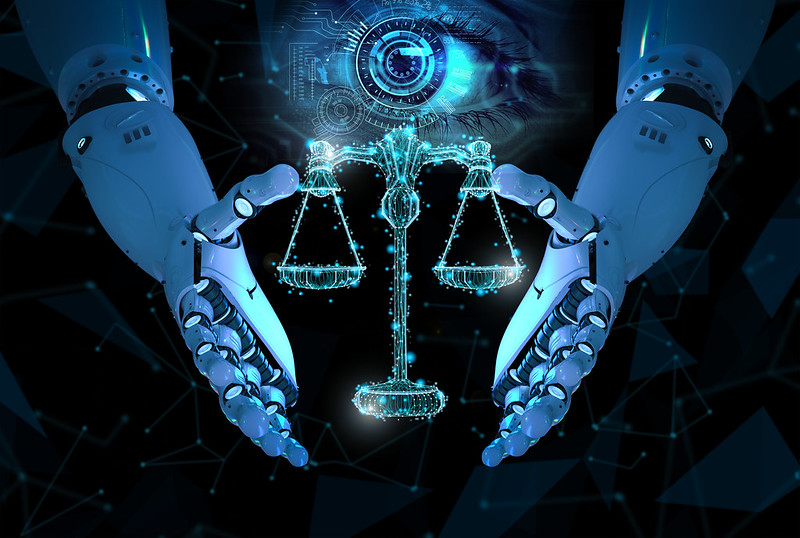
This image is part of the Transformation Projects at the Ars Electronica Kepler's Garden at the JUK. The installation AI Truth Machine deals with the chances and challenges of finding truth through a machine.

All the buzz recently has been about Generative AI, and for good reason. These new tools are reshaping the way we learn and work. Within the many conversations about Artificial Intelligence in Higher Ed a common thread has been appearing regarding the other AI–Academic Integrity. Creating and maintaining academic integrity in online courses is a crucial part of quality online education. It ensures that learners are held to ethical standards and encourages a fair, honest, and respectful learning environment. Here are some strategies to promote academic integrity and foster a culture of ethical behavior throughout your online courses, even in the age of generative AI. Create an Academic Integrity Plan Having a clear academic integrity plan is essential for any … The Other AI – Fostering Academic Integrity in Online Courses

Want to create a memorable experience for your students?

I was recently reminded of a conference keynote that I attended a few years ago, and the beginning of an academic term seems like an appropriate time to revisit it on this blog. In 2019, Dan Heath, a bestselling author and senior fellow at Duke University’s CASE Center, gave a presentation at InstructureCon, a conference for Canvas users, where he talked about how memories are formed. He explained that memories are composed of moments. Moments, according to Heath, are “mostly forgettable and occasionally remarkable.” To illustrate, most of what I’ve done today–dropping my kids off at spring break camp, replying to emails, going to a lunchtime yoga class, and writing this blog post–will largely be forgotten by next month. There … Want to create a memorable experience for your students?

Backwards Brand Design: How to SIFT through your work experience and craft a brand identity as an Instructional Designer

This article has its roots in a discussion I had with an Ecampus intern about going on the job market. This intern is working in an academic technologies role at a higher ed institution already, but also getting the Instructional Design certificate here at OSU. It was my first time thinking about what the growth of instructional design certificate and degree credentials means for all instructional designers. Very few of the instructional designers I’ve met and worked with here or at my previous institutions actually have degrees in instructional design, including myself. The field of instructional design emerged out of a specific institutional and educational need in higher education and corporate education, which makes for an ever-growing, ever-changing, but always … Backwards Brand Design: How to SIFT through your work experience and craft a brand identity as an Instructional Designer