Inspire Blog Category: Student Success

Reflection Assignments in Math Courses

(image from pxfuel.com) Reflection assignments as an active learning strategy are commonly seen in humanities courses. The purpose of this writing is to share an example of how simple reflection activities can make a huge impact in two math courses. MTH 251 Differential Calculus covers five units, with one exam for each unit, counting 14% of the final grade. Before students attempt to take the unit exam, they are assigned to read textbook readings, watch instructor-created lecture videos, work on Canvas-based homework assignment and Adaptive Learning based practice assignments in Knewton Lab online platform. After assignment due date expires, students are assigned to complete a weekly written homework reflection. The weekly homework and the weekly homework reflection together count for … Reflection Assignments in Math Courses
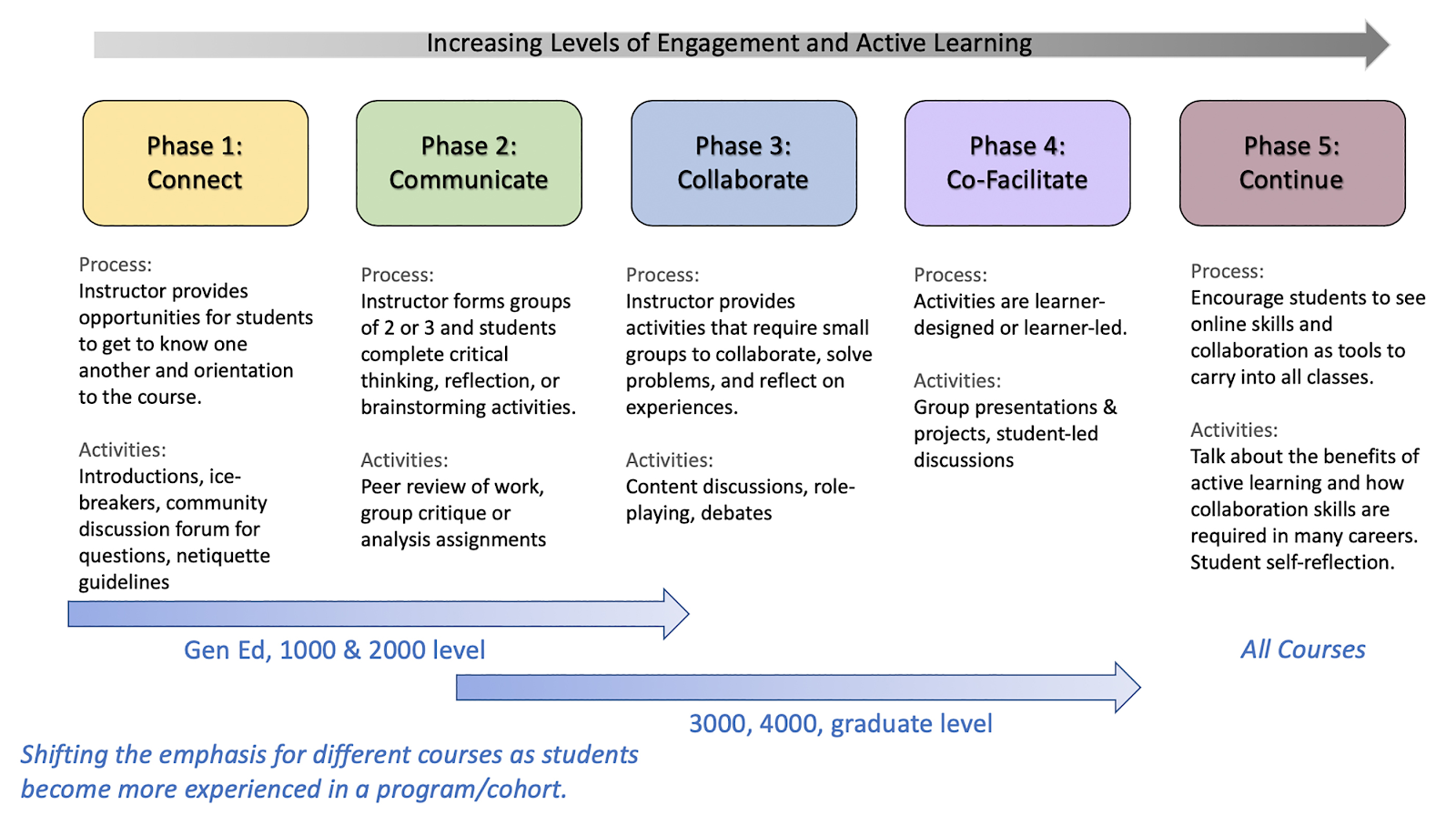
Improving Group Work in Asynchronous Courses

chart of five phases of engagement: connect, communicate, collaborate, co-facilitate, and continue

 Why Group Work Is Important  Love it or hate it, group work is an important part of education. Learning to work cooperatively with diverse people is a core 21st century skill, one which employers increasingly value and expect new workers to have mastered. Experience gathered from group work in educational settings directly transfers to and prepares students for successful collaboration in work teams. By collaborating in teams, students learn a wide range of discrete as well as soft skills that make group work worth the effort, including those below. Technology skills Social skills Self-awareness Empathy Coping with stress Creating work plans and schedules Forecasting needs and hurdles Time management & meeting deadlines Working with difficult personalities Managing & navigating unmet … Improving Group Work in Asynchronous Courses

Let’s Get Active: Adding Active Learning in Your Online Course

By Susan Fein, Instructional Designer, susan.fein@oregonstate.edu In my role as an instructional designer, the faculty I work with are often looking for ways to increase student engagement and add a “wow” factor to their online course. One way to do that is to add or increase active learning practices. Active learning requires students to do something and think about what they are doing, rather than simply listening, as with a passive-learning lecture (Bonwell & Eison, 1991). Active learning brings positive and lasting outcomes to students, including better retention and grasp of concepts, and is particularly evident when students work together to develop solutions (Chickering & Gamson, 1987). Tackling Discussions In 2019, I worked with an instructor developing a biochemistry/biophysics course … Let’s Get Active: Adding Active Learning in Your Online Course

Adding a New Feedback Loop to Your Online Courses

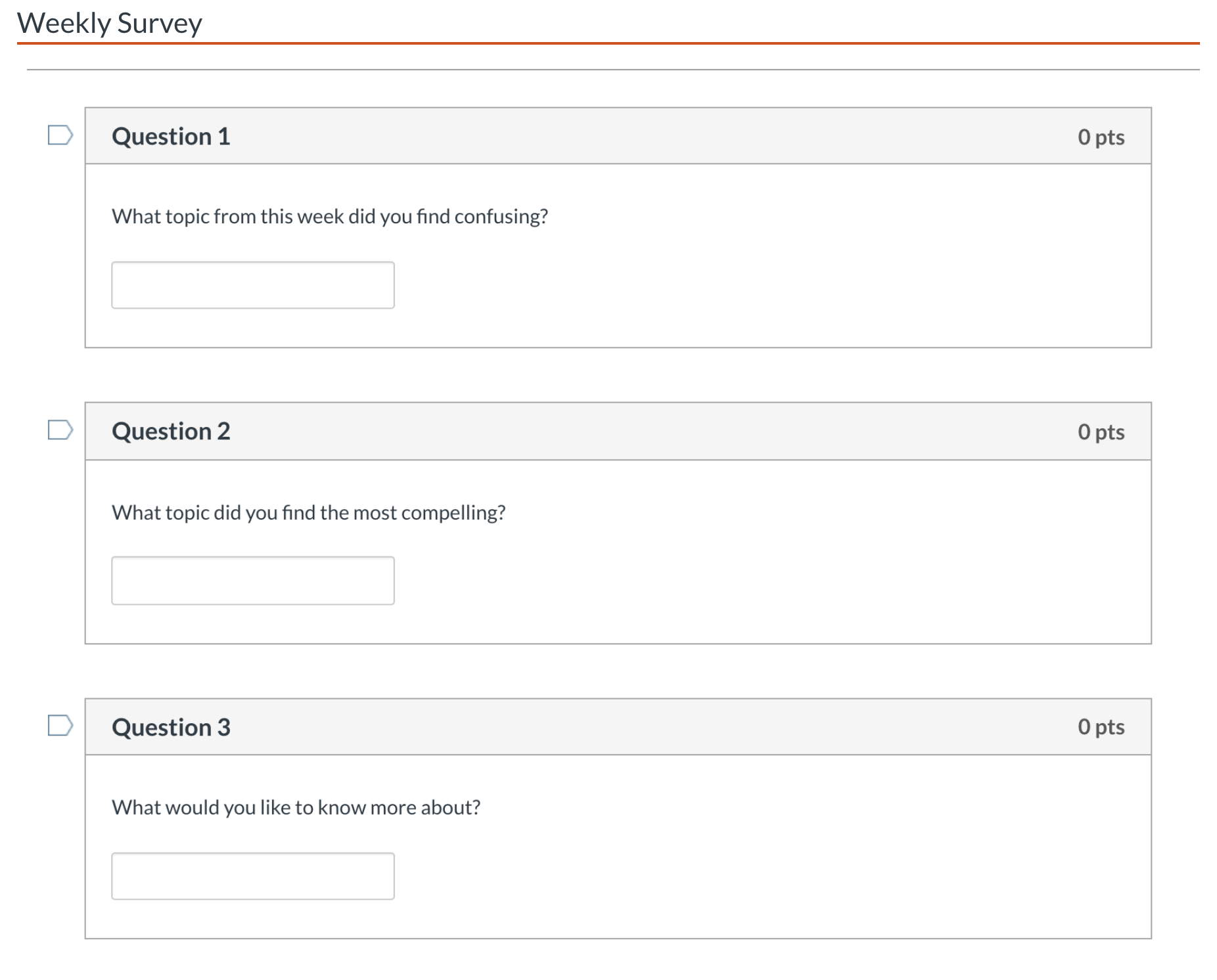
Canvas Survey with Mud Card Questions

New online instructors often express concern about the loss of immediate student feedback they get by teaching in person. These educators count on in-class interaction to help shape their lesson plans in real-time. Student questions, lack of interaction, or even blank looks, help them understand what concepts are difficult for their learners. Others just feel more comfortable with the two-way nature of in-classroom communication. But teaching in an online environment doesn’t have to be mutually exclusive from gauging student interest and comprehension. Mud Cards I was first introduced to the concept of “Mud Cards” or “Muddiest Points” through an open course MIT offered in Active Learning in College-Level Science and Engineering Courses. The instructor described handing out index cards to … Adding a New Feedback Loop to Your Online Courses

Academic Success During Turbulent Time (Part 2): Teach Students How To Learn

In part one of Academic Success, we reviewed why it is important to help students develop time management skills and how to design courses that help students manage time. In this post, we will discuss the why, what and how about teaching students how to learn. By this time, most public schools and higher education institutions are coming to a close for Spring 2020 teaching. Congratulations on overcoming so many challenges and finishing teaching during COVID-19! As we prepare for summer and/or fall teaching, I would like to invite instructors to consider teaching students how to learn in your next teaching adventure, in order to help students achieve academic success. Why Teach Students How to Learn? For teachers, teaching students … Academic Success During Turbulent Time (Part 2): Teach Students How To Learn