
Inspire Blog Tag: Course Design Ideas

Haunted by a Blank Course: Tales from a First-Time Developer

Special Edition: Guest Blog by Assistant Professor of Practice (Urban Forestry), Jennifer Killian When I was asked to create a new course for Oregon State University’s Ecampus program, my first reaction was a mix of sheer excitement… and, well, a little terror. I’ve built workshops, presentations, and even all-day trainings, but assembling ten weeks of graduate-level content from scratch? That felt like wandering through a haunted house to me. Dark, empty, and full of unknowns. Adding to the surrealness, I realized that thirteen years ago, I was a graduate student here, taking several Ecampus courses myself including an early version of the very class I would now be teaching. The idea that I could bring my professional experience back to … Haunted by a Blank Course: Tales from a First-Time Developer
The Other AI – Fostering Academic Integrity in Online Courses

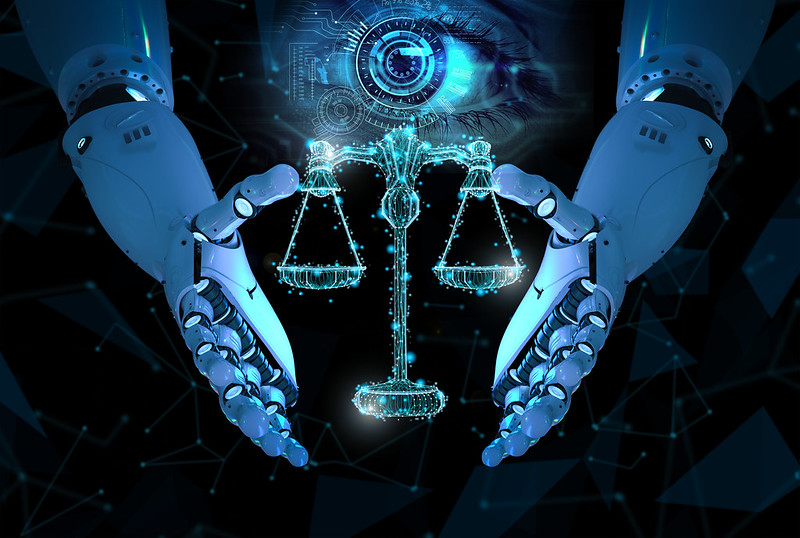
This image is part of the Transformation Projects at the Ars Electronica Kepler's Garden at the JUK. The installation AI Truth Machine deals with the chances and challenges of finding truth through a machine.

All the buzz recently has been about Generative AI, and for good reason. These new tools are reshaping the way we learn and work. Within the many conversations about Artificial Intelligence in Higher Ed a common thread has been appearing regarding the other AI–Academic Integrity. Creating and maintaining academic integrity in online courses is a crucial part of quality online education. It ensures that learners are held to ethical standards and encourages a fair, honest, and respectful learning environment. Here are some strategies to promote academic integrity and foster a culture of ethical behavior throughout your online courses, even in the age of generative AI. Create an Academic Integrity Plan Having a clear academic integrity plan is essential for any … The Other AI – Fostering Academic Integrity in Online Courses

Assessment Design: The Case Against Extra Credit

As a follow-up to discussing equity in grading and group work, Feldman (2019) offers a compelling case against the use of extra credit. “But wait a minute,” I can hear you saying, “Extra credit is optional—students have to opt-in if they want to do it! And it can be fun! What’s wrong with that?” Many instructors may think of extra credit as a way to benefit students and give them extra opportunities in a course, especially at the end of a term, to improve their grade, take on additional challenges, and demonstrate additional skills they have learned. (I know I thought about extra credit that way at one time!) However, there is more at play with extra credit than you … Assessment Design: The Case Against Extra Credit

Getting Experiential in Online and Hybrid Learning

The idea that students learn best when they have the opportunity to apply what they are learning to real-world contexts is the basis of Experiential Learning Theory (ELT). Learning by doing is at its core, and as a high-impact practice, there is increasingly more emphasis on experiential learning in higher education. There is plenty of evidence that supports the benefits of this type of learning. It affords students an opportunity to connect knowledge to authentic situations and increases learner autonomy, motivation, and overall satisfaction (Kolb and Kolb, 2018). Many OSU Ecampus Courses feature such experiences. In fact, OSU’s Honors College requires all courses to include experiential learning components, and this is increasingly the case across disciplines at OSU.  What does … Getting Experiential in Online and Hybrid Learning

Learning Outcomes: Do Students Even Read Them?

Learning outcomes (LOs) are used in instructional design to describe the skills and knowledge that students should have at the end of a course or learning unit, and to design assessments and activities that support these goals. It is widely agreed that specific, measurable outcomes are essential for planning instruction; however, some educators question the benefits of explicitly presenting them to students. I have been asked (and wondered myself): “What is the point of listing learning outcomes in the course?” “How do they help learning? “Do students even read them?” So, I went on a quest for research that attempted to answer such questions. I was particularly interested in unit/module-level outcomes, as those are the ones that directly steer the … Learning Outcomes: Do Students Even Read Them?