
Inspire Blog Tag: ecampus

Student Voices Support Quality Standards in Online Education

This post was written in collaboration with Mary Ellen Dello Stritto, Director of Ecampus Research Unit. Quality Matters standards are supported by extensive research on effective learning. Oregon State University’s own Ecampus Essentials build upon these standards, incorporating OSU-specific quality criteria for ongoing course development. But what do students themselves think about the elements that constitute a well-designed online course? The Study The Ecampus Research Unit took part in a national research study with Penn State and Boise State universities that sought student insight into what elements of design and course management contribute to quality in an online course. Data was collected from 6 universities across the US including Oregon State in Fall of 2024. Students who chose to participate … Student Voices Support Quality Standards in Online Education
Liminal Space: Belonging and UDL 3.0

This is a guest post by Winter 2025 Ecampus Instructional Design Intern Terrence Scott. Creating Online Learning Spaces Where Adult Learners Belong Today’s college students are increasingly adults returning to education to pursue career shifts, personal growth, or new credentials. Yet, this return often brings discomfort. Adult learners find themselves in a liminal space, caught between who they were and who they are becoming as students. This “in-between” state is a psychological and social threshold where identity and belonging are in flux (Maksimović, 2023; Turner, 1969). Liminal space is defined as “characterized by the questioning and reexamination of one’s identity, often as a result of transitional moments in an individual’s life such as separation, loss, and conflicts” (Maksimović, 2023). Rather … Liminal Space: Belonging and UDL 3.0

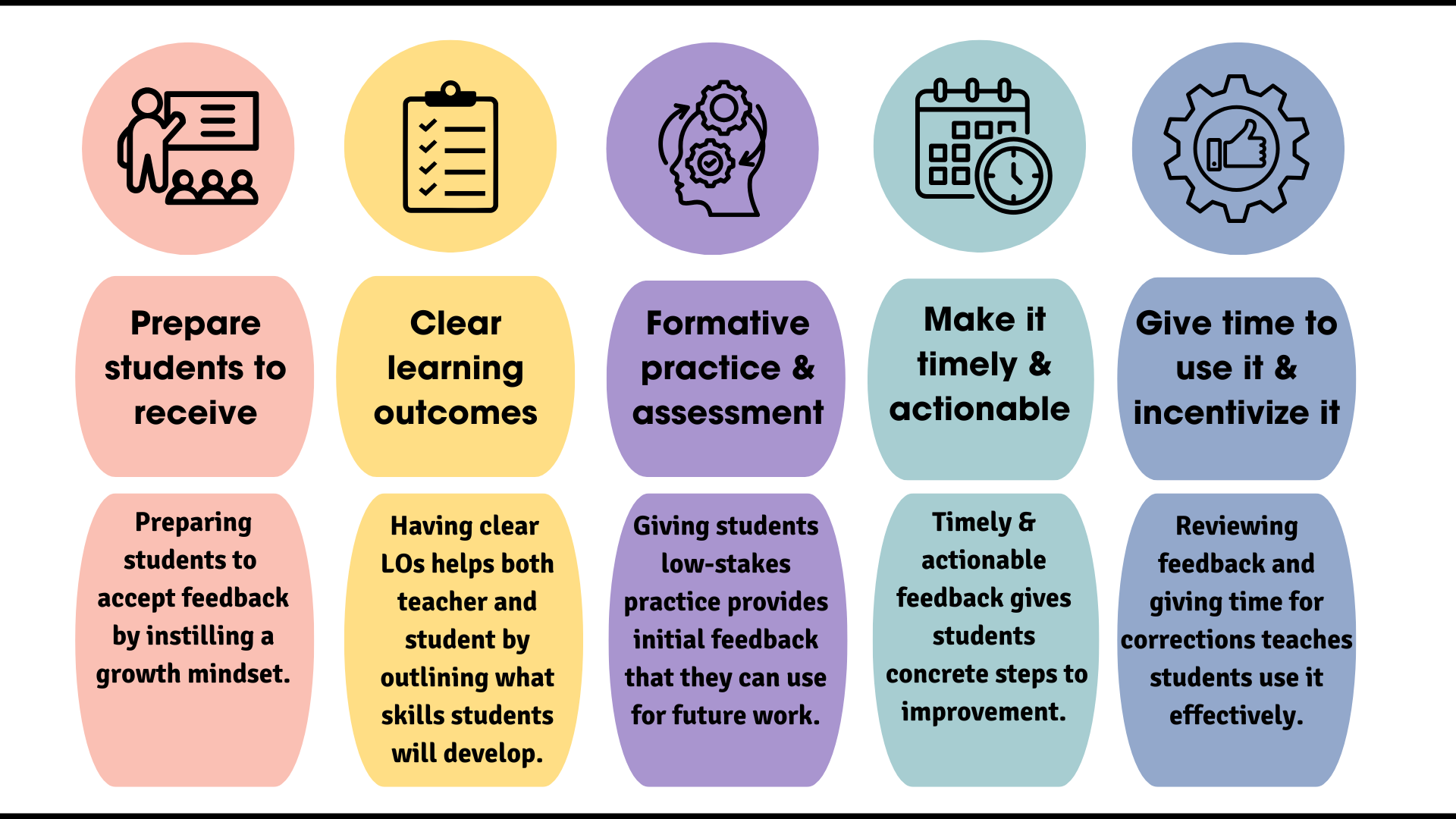
Improving the Feedback Cycle, Part 2

chart describing the steps in the feedback process

In part one of this two-part blog series, we focused on setting the stage for a better feedback cycle by preparing students to receive feedback. In part two, we’ll discuss the remaining steps of the cycle- how to deliver feedback effectively and ensure students use it to improve. In part one, we learned about the benefits of adding a preliminary step to your feedback system by preparing students to receive suggestions and view them as helpful and valuable rather than as criticism. If you haven’t read part one, I recommend doing so before continuing. This first crucial but often overlooked step involves fostering a growth mindset and creating an environment where students understand the value of feedback and learn to … Improving the Feedback Cycle, Part 2

Welcoming Online Students

One of my favorite design strategies is to make a small adjustment that delivers a big impact. When it comes to creating a welcoming online course, certain small adjustments can do just that and go a long way in warming up the online classroom. But first, let us look at why online courses ought to be welcoming and then what it means to be welcoming in the online space. Why Welcoming Students Is Important First, why is it important to design a welcoming course? According to the OSU Ecampus Online Teaching Principles, which are supported by research and endorsed by Quality Matters, it is recommended to “[m]ake facilitation choices that support diverse students and make each student feel welcomed and … Welcoming Online Students