
Inspire Blog Tag: student success

Supporting Students with Dyscalculia, by Chandler Gianattasio

This is a guest post by Ecampus Instructional Design Intern Chandler Gianattasio. At DePaul School for Dyslexia, I teach 5th-8th graders conceptual mathematics, ranging from basic number sense to advanced topics in Algebra 1. Through this experience, I have discovered something I had never heard of before, a learning disability commonly seen coinciding with dyslexia, called dyscalculia. Many people describe dyscalculia as “dyslexia for math.” Dyscalculia affects one’s ability to take in mathematical information, connect with and build upon prior concepts learned, discern cues for application, and accurately retrieve information. DePaul provides an alternative education for students with learning disabilities, emphasizing explicit instruction to best support their students. In this post, I will discuss the common deficits that make up … Supporting Students with Dyscalculia, by Chandler Gianattasio
Importance of Self-Care in Online Learning

The following is a guest blog post from Andrea De Lei. Andrea completed an Instructional Design internship with OSU Ecampus during Fall 2021. WHY SELF-CARE IS IMPORTANT FOR COLLEGE STUDENTS Stress is not a new concept to college students, faculty, or staff. By teaching and incorporating self-care and overall health into your curriculum and design, your students can better manage stress and the host of obligations they may have to balance: full course loads, employment, commitments to their family and friends, internship, and networking opportunities. The Covid-19 pandemic this past two years added additional stressors both in teaching and engaging with students -added isolation and global pandemic stressors. To say these past two years was challenging would be an understatement. … Importance of Self-Care in Online Learning

Improving Group Work in Asynchronous Courses

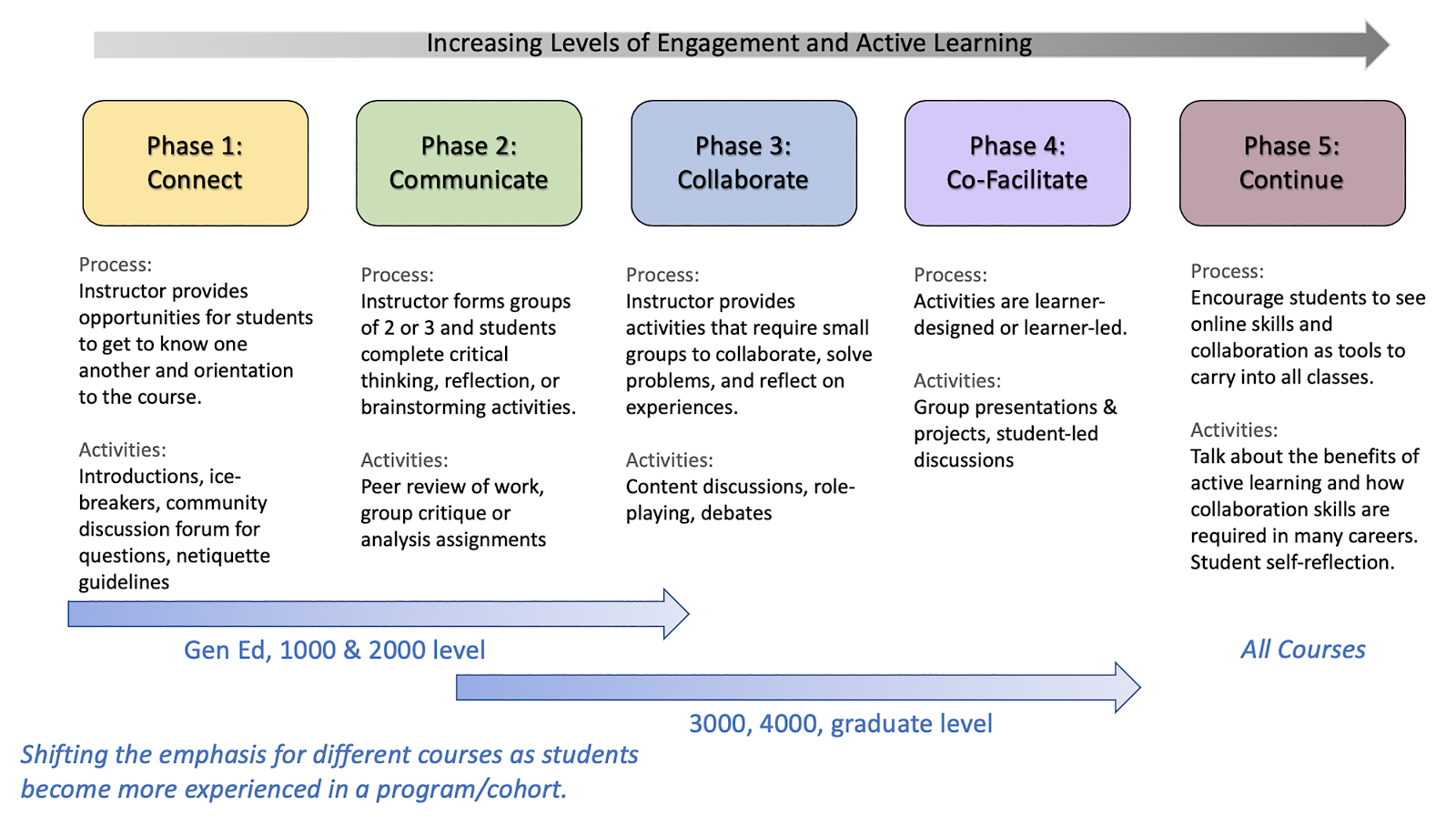
chart of five phases of engagement: connect, communicate, collaborate, co-facilitate, and continue

 Why Group Work Is Important  Love it or hate it, group work is an important part of education. Learning to work cooperatively with diverse people is a core 21st century skill, one which employers increasingly value and expect new workers to have mastered. Experience gathered from group work in educational settings directly transfers to and prepares students for successful collaboration in work teams. By collaborating in teams, students learn a wide range of discrete as well as soft skills that make group work worth the effort, including those below. Technology skills Social skills Self-awareness Empathy Coping with stress Creating work plans and schedules Forecasting needs and hurdles Time management & meeting deadlines Working with difficult personalities Managing & navigating unmet … Improving Group Work in Asynchronous Courses

Memory: Where All the Magic Happens

Memory plays the central role in learning – it is “the mechanism by which our teaching literally changes students’ minds and brains” (Miller, 2014, p. 88). Thus, understanding how memory works is important for both instructional designers and instructors. According to modern theories, memory involves three major processes: encoding (transforming information into memory representations), storage (the maintenance of these representations for a long time), and retrieval (the process of accessing the stored representations when we need them for some goal or task) (Miller, 2014). Let’s briefly review these processes and see how they may inform our course design and instruction. Encoding – What Is the Role of Attention and Working Memory? How does encoding happen? We receive information from our … Memory: Where All the Magic Happens