Inspire Blog Tag: engagement

Project-based Learning (Part 2) – Mindful Design

Ashlee M. C. Foster, MSEd | Instructional Design Specialist | Oregon State University Ecampus Whether a pedagogical approach is affirmed by research and/or practical evidence intentional design and effective deployment of pedagogical strategies are essential. We will begin with an exploration of evidence-based design components, which build upon the characteristics of Project-based Learning (PjBL), as discussed in Project-based Learning (Part 1) – Architecture for Authenticity. Getting Started Begin with the end in mind. Take a moment to establish the outcomes, goals, and real-world connections that will underpin the project. Consider using the following elements as your guide.   Identify the Course Learning Outcomes (CLO) students should be able to demonstrate upon successful completion of the course Identify the intended project outcomes … Project-based Learning (Part 2) – Mindful Design
Project Based Learning – Architecture for Authenticity

By: Ashlee M. C. Foster MSEd, Instructional Design Specialist | Oregon State University Ecampus Did you know a pedagogical approach exists that positively impacts student academic achievement and engages them as active participants in learning? Great news…there is! Let me introduce you to the world of Project Based Learning (PBL).  What is PBL? PBL is a student-centered pedagogical approach where students, both individually and within small groups, engage with meaningful, relevant, and authentic projects which result in a product. Oftentimes, PBL is commonly associated and/or thought to be interchangeable with Problem Based Learning. However, there is a distinction between the two. The principal focus of PBL is on the active construction of knowledge. Additionally, student autonomy, beliefs, values, and motivations … Project Based Learning – Architecture for Authenticity

Improving Student Engagement and Connection in Online Learning: Part II, Methodologies and Practices

Introduction Since the first post in the series appeared a few months ago, we have received plenty of feedback from other instructors who are actively engaged in online education. Some of the stories shared by them reiterate the points we discussed, and others included tips and techniques that have worked particularly well for them. Almost all of them agreed that teaching well online remains a challenging task. “I love the notes on proactive student support … especially the notes on checking in with those who are behind. Sometimes all they need is a little empathy!” Vic Matta, Associate Professor, College of Business, Ohio University  “I regularly incorporate each of these in my relationships with my students, to include weekly zoom … Improving Student Engagement and Connection in Online Learning: Part II, Methodologies and Practices

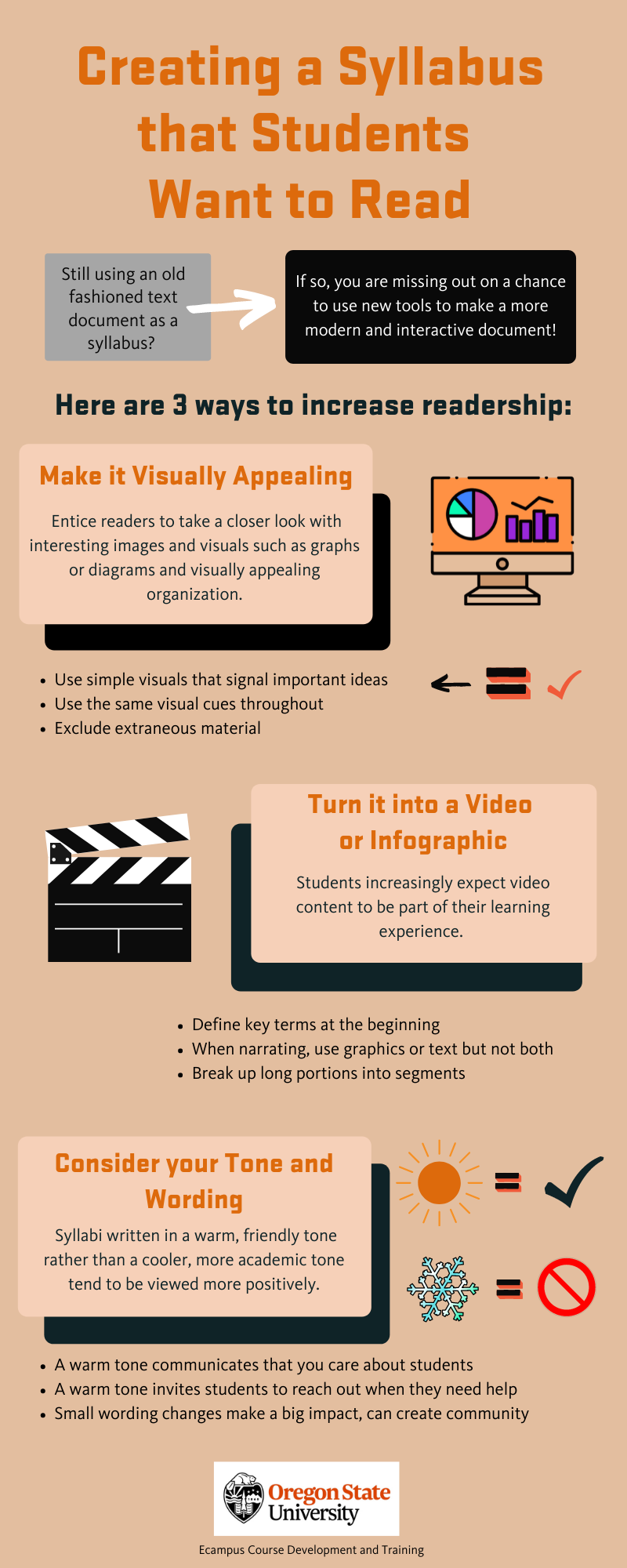
Creating a Syllabus that Students Want to Read

Tricks to creating a syllabus students want to read

In December 2021, CNN published a news story that went viral, featuring a Tennessee professor who hid in his syllabus a combination that led to a locker with a crisp $50 bill for the taking. When he announced at the end of the term that not a single student had claimed the prize, few were actually surprised. Hiding an Easter egg of this sort in the text of your syllabus is certainly a fun idea and a nice bonus for the most diligent student(s) who might find it, but there are other ways to get students to read what could arguably be the most important document in your course.  A course syllabus has traditionally served many overlapping purposes. From an … Creating a Syllabus that Students Want to Read

My Experience with Emojis in Online Courses: Affordances and Considerations

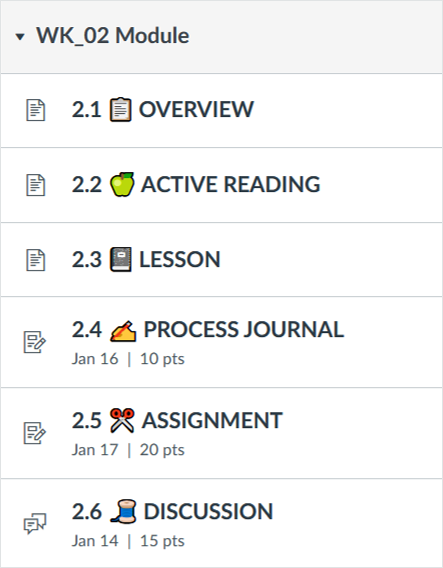
clipboard, green apple, notebook, hand writing with pencil, scissors and spool of thread emojis used in module items

What should you know about emojis if you plan to use them in your online courses? Not being an extremely online person and not, perhaps, of the right generation, I came to emojis later than others and felt uncertain using them. What did these symbols communicate to others, and how would it reflect on me if I used them in my work with instructors and students? Without research-based answers to these questions, I nonetheless began using emojis in online course designs for the purpose of visual wayfinding and for fostering a friendly, playful tone. After several terms of using emojis in this way, I wondered whether they were accomplishing my goals. Now I’d like to share the background on emojis … My Experience with Emojis in Online Courses: Affordances and Considerations