Inspire Blog Tag: feedback

What Our Online Students Told Us About Navigating Canvas (and What It Means for Course Design)

Authors: Mary Ellen Dello Stritto & Dana Simionescu What We Did and Why When we design online courses, we make hundreds of small decisions about where to put things or how to introduce them. Should assignment instructions come before or after the readings? Does anyone look at the Module Learning Outcomes? Most of these calls get made on how we know people learn, what we think learners do, or what the program has always done, but rarely on concrete evidence about how students actually move through a Canvas course. So, we asked them. During Winter 2026, we surveyed 463 Oregon State University Ecampus students about how they navigate Canvas, where they look for information, how they engage with course elements, … What Our Online Students Told Us About Navigating Canvas (and What It Means for Course Design)
Improving the Feedback Cycle, Part 2

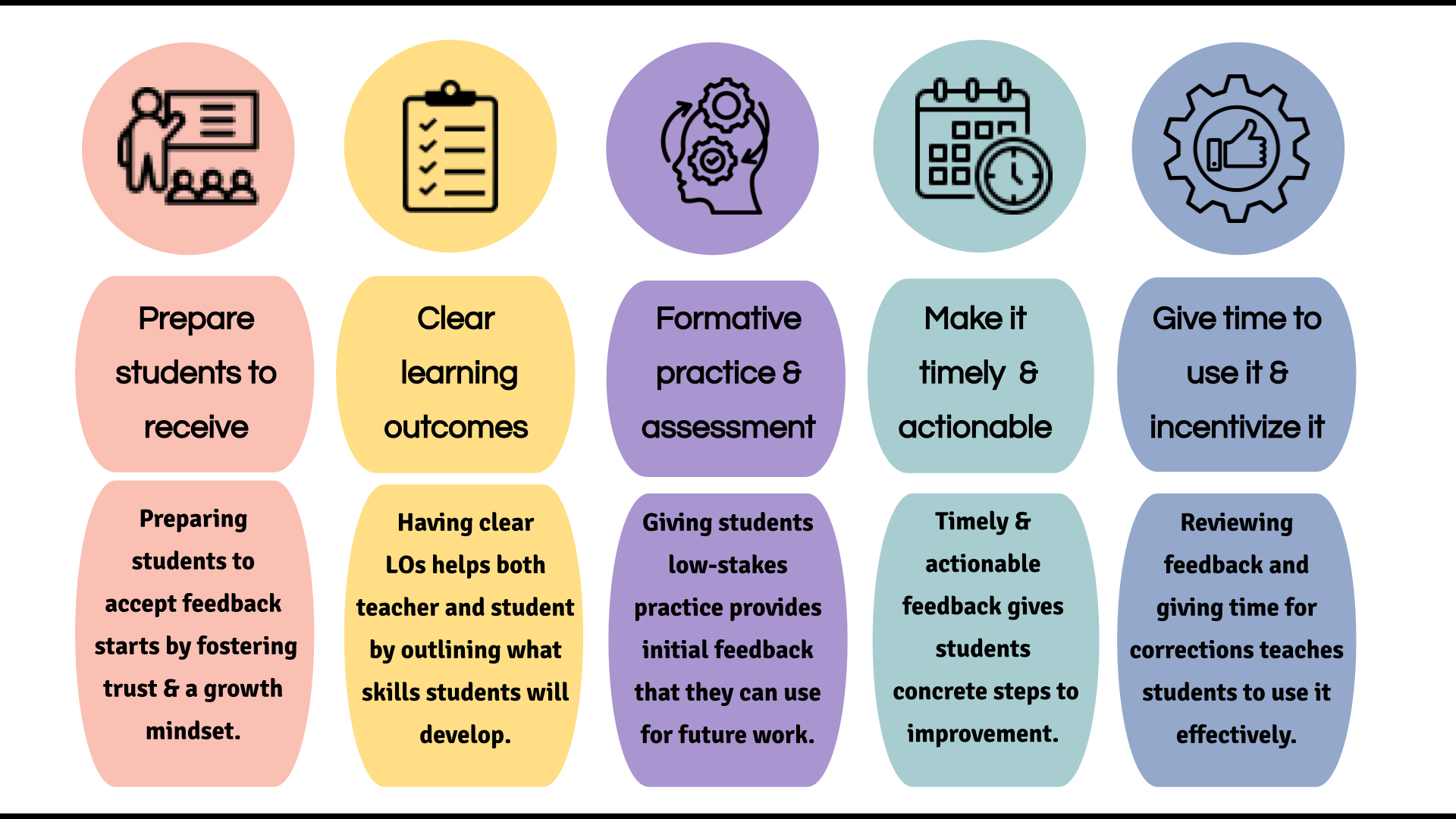
chart describing the steps in the feedback process

In part one of this two-part blog series, we focused on setting the stage for a better feedback cycle by preparing students to receive feedback. In part two, we’ll discuss the remaining steps of the cycle- how to deliver feedback effectively and ensure students use it to improve. In part one, we learned about the benefits of adding a preliminary step to your feedback system by preparing students to receive suggestions and view them as helpful and valuable rather than as criticism. If you haven’t read part one, I recommend doing so before continuing. This first crucial but often overlooked step involves fostering a growth mindset and creating an environment where students understand the value of feedback and learn to … Improving the Feedback Cycle, Part 2

Improving the Feedback Cycle, Part 1

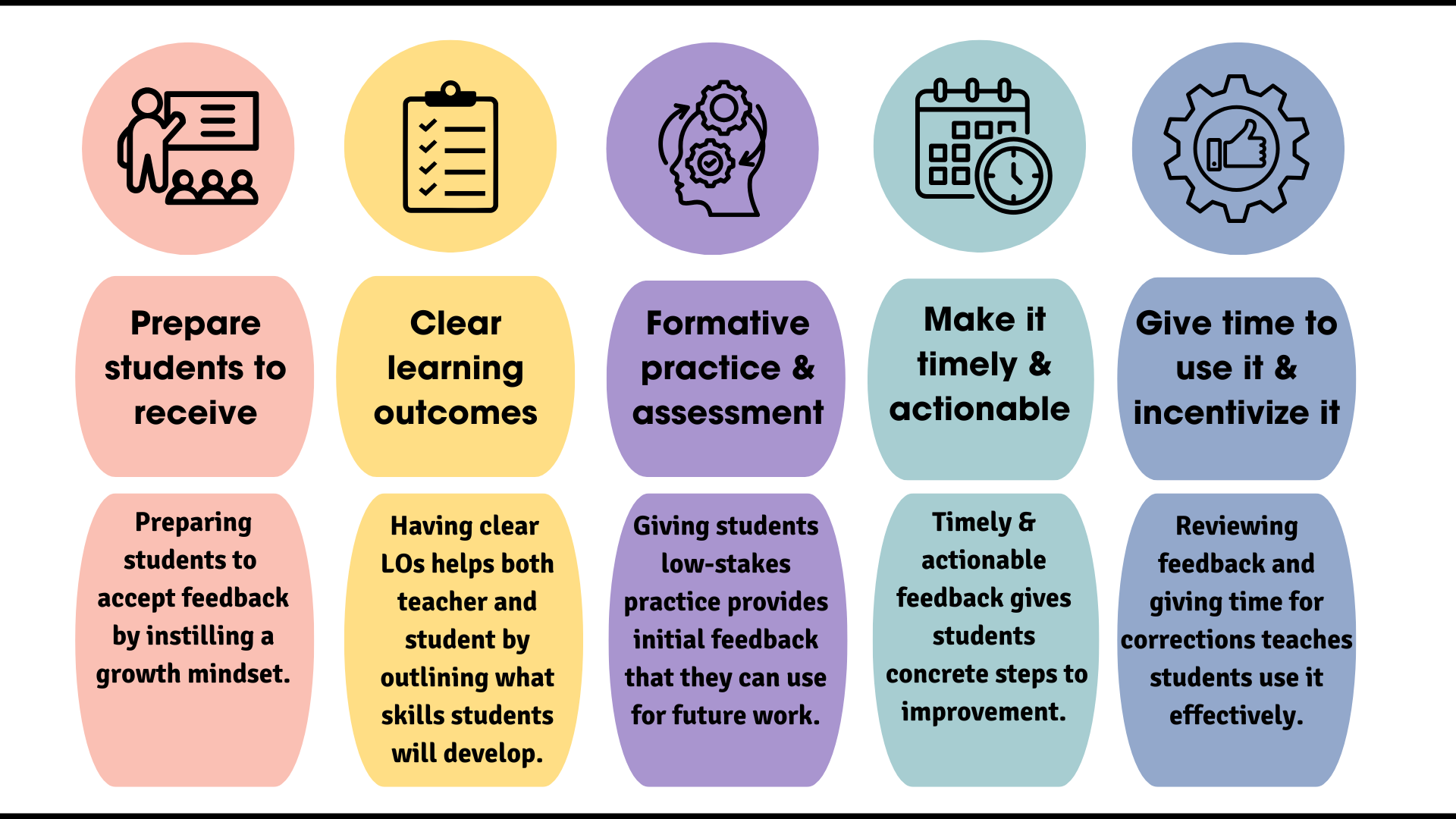
graphic image of the five steps in the feedback cycle

An effective feedback cycle starts before the feedback is given by laying careful groundwork. The first and often-overlooked step in the cycle is preparing students to receive feedback, which takes planned, ongoing work.

Structure, Flexibility, and Feedback as an Equity Strategy

The idea of creating equitable learning environments is at the core of inclusive practices. Many educators argue that equitable learning environments are essential for student success, but what does this mean in practice? Inclusive practices build upon the premise that design and teaching should adapt to support students’ unique needs, fostering student agency. Student-centered approaches prioritize equity over equality. It’s crucial to understand that equity, which tailors resources and opportunities to individual needs, fundamentally differs from equality, which assumes that students should receive the same treatment and that this treatment is thus fair for all. Equity refers to the “removal of systemic barriers and biases (e.g., policies, processes, outcomes), enabling all individuals to have equal opportunity to access and benefit … Structure, Flexibility, and Feedback as an Equity Strategy

Reducing ‘Distancing’ in Distance Learning: Insights from Student Feedback in Online Education

In the ever-evolving landscape of higher education, online, distance learning has emerged as a dynamic and accessible platform for students worldwide. However, with this shift to asynchronous online classrooms we must prioritize inclusivity and engagement in our educational strategies. Recognizing this need, Ecampus embarked on a journey to understand inclusive course design and teaching practices through the eyes of the learners. Survey Summary  In 2021, Ecampus implemented an Inclusive Excellence Strategic Plan. One goal of this plan focused on enhancing inclusive teaching and learning in online courses. As part of this initiative, a pilot study was conducted during the academic year 2022-2023, to develop a mechanism for students to provide feedback on their learning experiences. The study employed a series … Reducing ‘Distancing’ in Distance Learning: Insights from Student Feedback in Online Education