Inspire Blog Tag: feedback

Learning from Games: Failure Edition

This is the paradox of failure in games. It can be stated like this: We generally avoid failure. We experience failure when playing games. We seek out games, although we will experience something that we normally avoid. (Juul, p. 2) As a continuation from my last blog post considering grades and Self-Determination Theory, I wanted to take a brief side-quest into considering what it means to experience failure. Jesper Juul’s The Art of Failure: An Essay on the Pain of Playing Video Games will provide the main outline and material for this post, while I add what lessons we might learn about feedback and course design in online settings. Dealing with Failure Juul outlines how games communicate through feedback using … Learning from Games: Failure Edition

Adding a New Feedback Loop to Your Online Courses

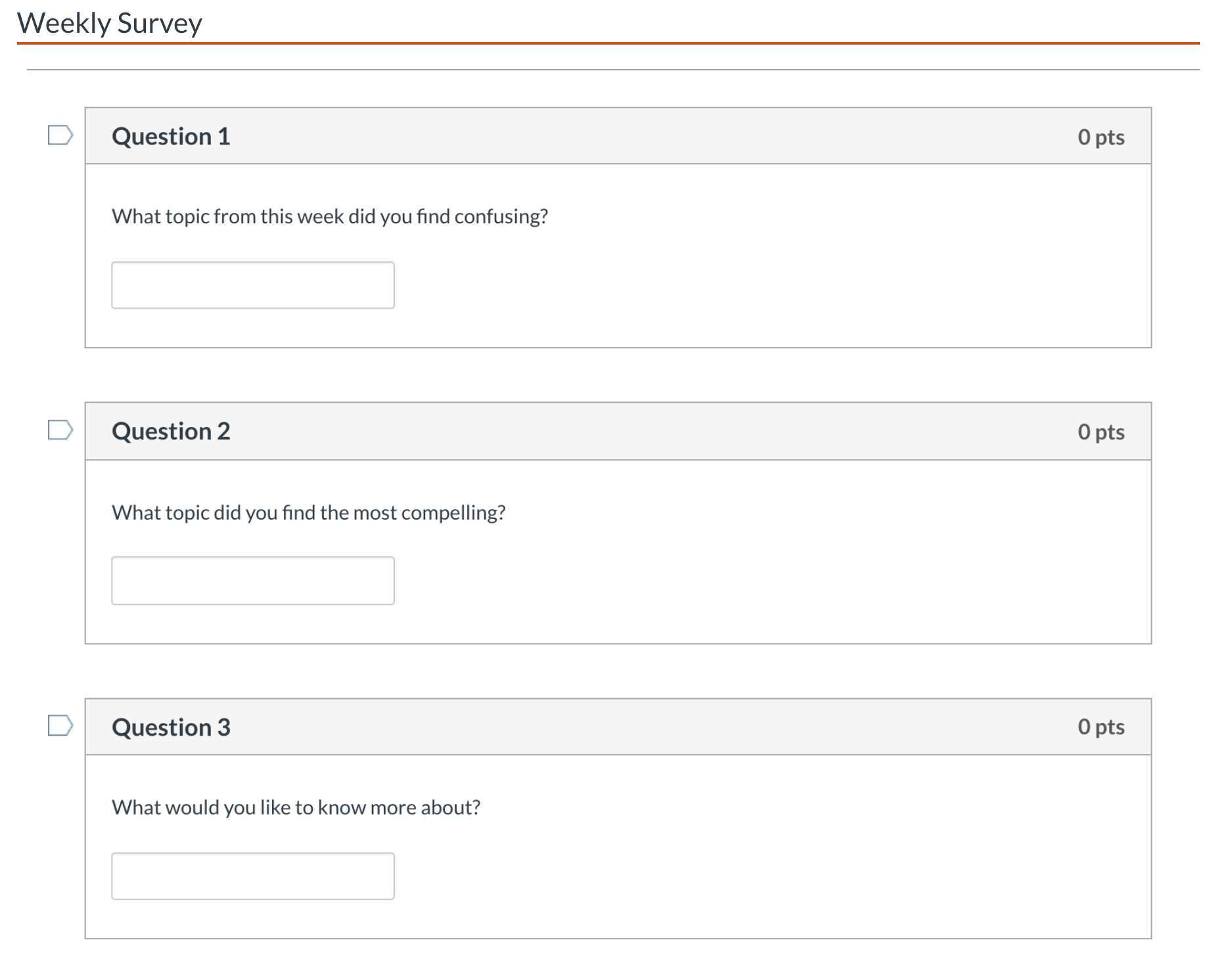
Canvas Survey with Mud Card Questions

New online instructors often express concern about the loss of immediate student feedback they get by teaching in person. These educators count on in-class interaction to help shape their lesson plans in real-time. Student questions, lack of interaction, or even blank looks, help them understand what concepts are difficult for their learners. Others just feel more comfortable with the two-way nature of in-classroom communication. But teaching in an online environment doesn’t have to be mutually exclusive from gauging student interest and comprehension. Mud Cards I was first introduced to the concept of “Mud Cards” or “Muddiest Points” through an open course MIT offered in Active Learning in College-Level Science and Engineering Courses. The instructor described handing out index cards to … Adding a New Feedback Loop to Your Online Courses

Facilitating Active Learning with Zoom

Facilitating Active Learning with Zoom By Christine Scott, Instructional Design Specialist, Oregon State University Ecampus So you managed to get your face-to-face courses up and running remotely in the midst of a global pandemic. You’ve secured your Zoom sessions to avoid unwanted disruptions, your students are in their virtual seats, and you’ve successfully delivered a few lectures. So what’s next? Now that you have students’ attention, you may find that you’re ready to focus on transforming your synchronous session into a space for active learning to take place. It’s no secret that students learn better when they are actively engaged in the learning process. The question is how that translates to a remote Zoom session. Is it even possible to … Facilitating Active Learning with Zoom

Self-Determination Theory and Online Education: Thinking About Grades

Photo by Terry Vlisidis on Unsplash Last Time on SDT & Online Education… This post is a continuation of my previous blog posts on Self-Determination Theory (SDT) and Online Education and a companion post to Chris Lindberg’s series of posts, Games as a Model for Motivation and Engagement. In my last post, I posed some difficult questions to consider as you start thinking about how you use grades and motivation in your courses. In case you missed that post, here are the questions—I invite you to spend a few minutes, hours, or days with these questions before moving on with the rest of this blog post: Do you use grades to create external regulation of behavior in your course? Are … Self-Determination Theory and Online Education: Thinking About Grades