Inspire Blog Tag: engagement

Audio feedback: What does the research say?

First, let’s start by considering the characteristics of effective feedback in general. What comes to mind? Perhaps you hear in your head (in the authentically authoritative voice of a past professor) the words timely, frequent, regular, balanced, specific. Perhaps you recall the feedback sandwich–corrective feedback sandwiched between positive feedback. Perhaps you consider rubrics or ample formative feedback to be critical components of effective feedback. You wouldn’t be wrong. As educators, we understand the main characteristics of effective feedback. But despite this fact, students are often disappointed by the feedback they receive and faculty find the feedback process time consuming, often wondering if the time commitment is worth it. As an instructional designer, I hear from faculty who struggle to get … Audio feedback: What does the research say?

Asynchronous Conversations in VoiceThread

student response slide

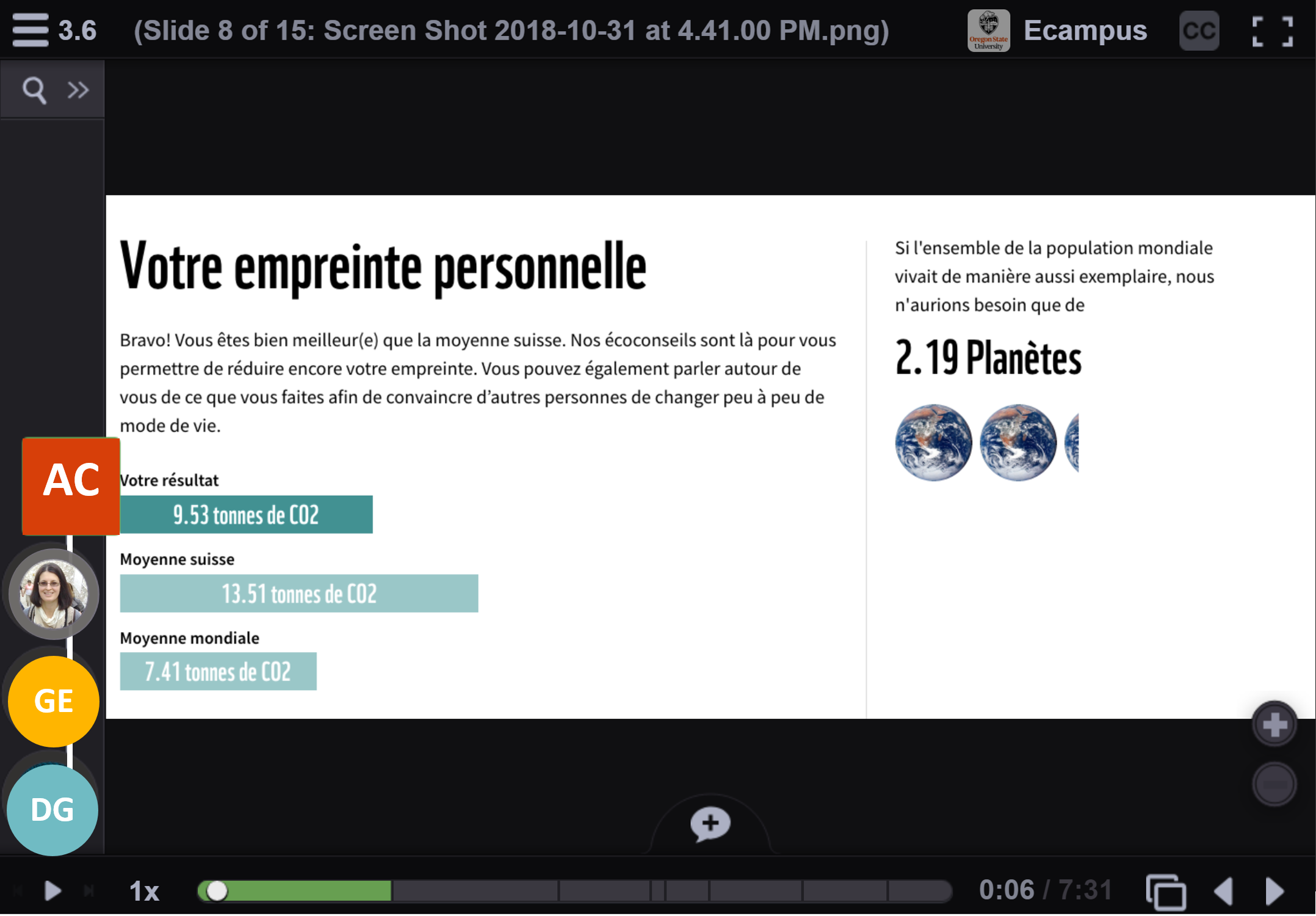
In my last post, I described how Ecampus courses use synchronous study sessions to provide listening and speaking practice to students of world languages. Much of the Ecampus language learning experience is entirely asynchronous, however, to provide flexibility for our students. So how exactly do students converse asynchronously? This post will describe the design of asynchronous listening and speaking exercises in 300-level French conversation courses, executed by Ana-Maria M’Enesti, PhD, and facilitated via VoiceThread, a slide show within the LMS that displays course content about which participants comment via text, audio, or video. VoiceThread was an appealing platform because of the ease with which students can add audio or video comments, more streamlined than the protocol for uploading video to … Asynchronous Conversations in VoiceThread

9 Ways to Start Thinking Like a Game Designer

What can instructional designers learn from video game design? This might seem like a silly question—what do video games have to do with learning? Why might we use video games as an inspiration in pedagogy? As instructional designers, faculty often come to us with a variety of problems to address in their course designs—a lack of student interaction, how to improve student application of a given topic, and many more. While there are many tools at our disposal, I’d like to propose an extra tool belt for our kit: what if we thought more like game designers? Video games excel at creating engaging and motivating learning environments. Hold on a minute, I hear you saying, video games don’t teach anything! … 9 Ways to Start Thinking Like a Game Designer

Active Learning: What Does the Research Show?

Active Learning: What Does the Research Show? We often hear about new approaches in teaching, and some can take on near-mythical status. That might be the case for active learning. It’s been widely touted as the “most effective” pedagogical approach, but unless you have time to dig through the research, it may not be easy to determine if this trend is applicable – or beneficial – to your teaching and discipline. So what does the research say about active learning? This article provides a brief summary of research results for active learning applied in STEM subjects. Why Use Active Learning? Before we discuss why active learning is beneficial, let’s clarify exactly what active learning is. As opposed to passive learning, … Active Learning: What Does the Research Show?